Getting Scuba Certified in Punta Cana: PADI Open Water Guide
How to get PADI Open Water certified in Punta Cana — course duration, costs, choosing a dive center, medical requirements, what's realistic on vacation.
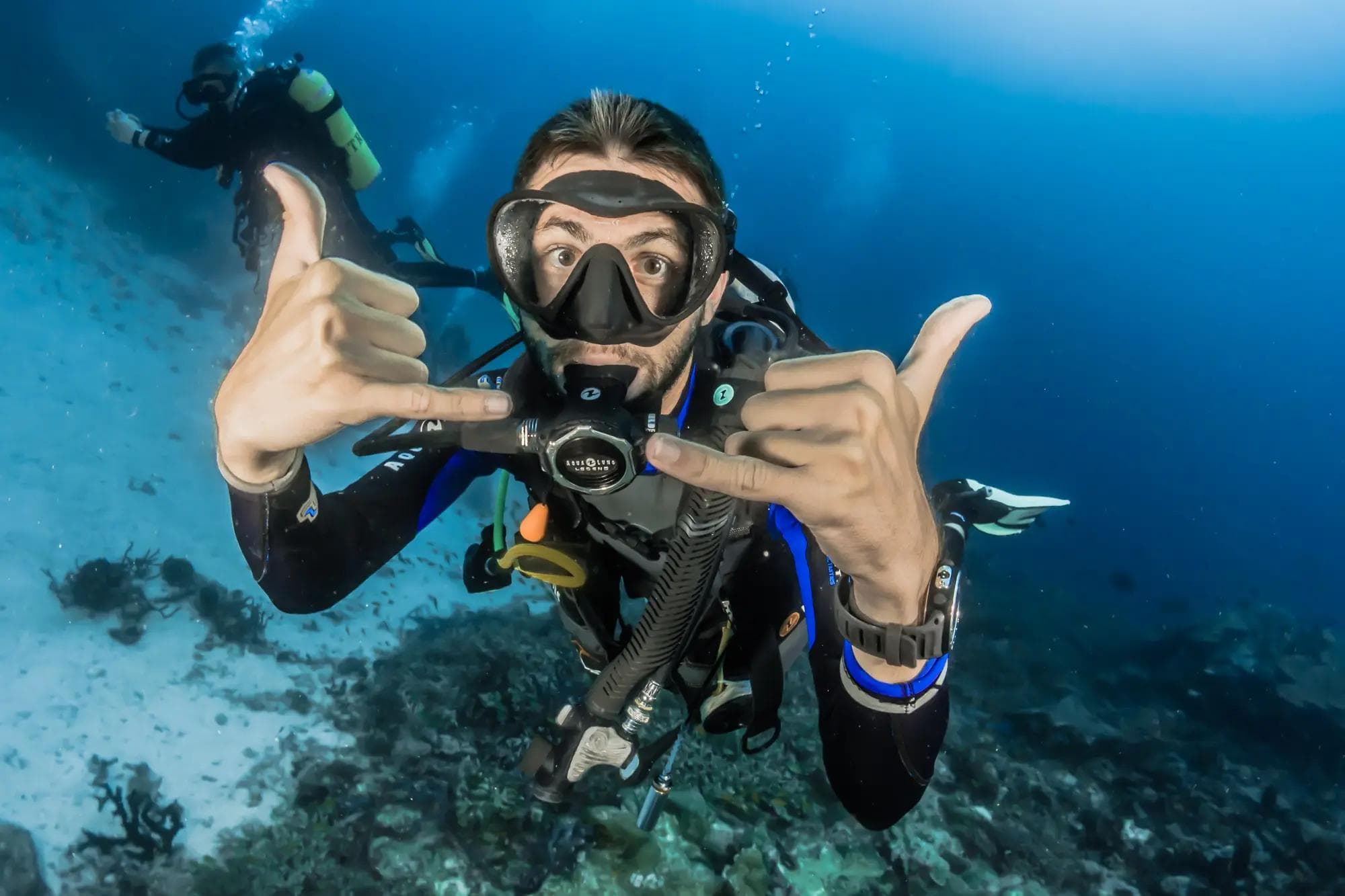
Getting your PADI Open Water certification in Punta Cana is one of the best vacation investments you can make if you have the time and interest. The water is warm year-round, visibility is generally good, the dive sites (especially around Bayahibe) are well-established and varied, and the cost is significantly lower than getting certified at home. The certification is recognized worldwide and lets you dive at virtually any tropical destination for life. But there are realistic considerations — the course takes time, requires some swimming ability and medical fitness, and ends with a critical fly-after-diving wait that affects when you can leave the country.
This guide explains what the PADI Open Water course actually involves, how to choose a dive center in the Punta Cana region, what to expect day-by-day, and the things people often get wrong on their first dive vacation. If you'd like help arranging a certification course matched to your travel dates, fitness level, and budget, contact our team — we work with the established dive centers around Bayahibe and can match you with one that fits your needs.
What Is the PADI Open Water Course?
The PADI (Professional Association of Diving Instructors) Open Water Diver certification is the entry-level scuba certification recognized by virtually every dive operator worldwide. Once certified, you can dive to a maximum depth of 18 meters (60 feet) with another certified diver as your buddy, anywhere in the world, for life. The certification has no expiration — your card from a Punta Cana course in 2026 will still be valid in 2046.
The course as defined by PADI consists of three phases: knowledge development (online study or classroom theory), confined-water training (pool or pool-like environment to practice skills), and open-water training (4 dives in actual open water with an instructor). Most students complete the whole certification in 3 to 4 days when done as an intensive course, though splitting the eLearning portion before your trip lets you compress the in-person time to 2 to 3 days.
Minimum Requirements and Who Can Be Certified
The PADI Open Water course has these basic requirements: minimum age 10 (younger students earn the Junior Open Water Diver certification, which converts to standard Open Water at age 15), ability to swim 200 meters unassisted, ability to tread water or float for 10 minutes, and medical fitness as established by the standard Diver Medical Participant Questionnaire developed jointly by the Undersea and Hyperbaric Medical Society and the Diver Medical Screen Committee. Most healthy adults pass without issue, but pre-existing conditions like asthma, heart conditions, diabetes, recent surgery, ear problems, or pregnancy require a physician's clearance before enrollment.
PADI's own rules documentation also notes that Junior Open Water Divers between 10 and 11 are restricted to dives no deeper than 12 meters and must dive with a certified parent, guardian, or PADI Professional. Divers between 12 and 14 can dive to 18 meters but must dive with a certified adult. At 15, they automatically convert to standard Open Water Diver status with no junior restrictions.
Course Structure: What You'll Actually Do
Phase 1 — Knowledge Development (4 to 8 hours)
The theory portion covers physics (why pressure matters at depth), physiology (what breathing compressed air does to your body), equipment (how regulators, BCDs, and tanks work), dive planning (depth and time limits), and basic safety procedures. Most students do this online before they arrive (PADI eLearning) — this is strongly recommended because it removes 6 to 8 hours from your vacation schedule. There's a final exam (multiple choice) at the end that requires 75 percent or higher to pass; the material is straightforward and the failure rate is very low among students who actually do the reading.
Phase 2 — Confined Water Training (1 to 2 days)
In the pool or sheltered shallow water (most Punta Cana dive centers use a hotel pool for this), you'll practice the core skills: assembling your equipment, breathing on the regulator, recovering a dropped regulator, clearing water from your mask, neutral buoyancy, ascent and descent procedures, removing and replacing equipment underwater, and emergency procedures. Most students find these skills awkward at first and competent by the end of the day. The skills are repeated until they're second nature — diving is not about athletic ability but about procedural fluency.
Phase 3 — Open Water Dives (2 days)
Four open-water dives demonstrate the skills you learned in the pool, now in actual ocean conditions. These dives are typically at shallow reef sites — around Bayahibe, common choices include Dominicus Reef, Catalina Wall (shallow zone), and Atlantic Princess wreck (the shallower of the two Bayahibe wrecks). Maximum depth on training dives is 18 meters, with most around 12 to 15 meters. After completing all four dives competently, you receive your certification card.
Choosing a Dive Center in Punta Cana
There are many dive centers operating in the Punta Cana and Bayahibe region, with significant variation in quality, equipment maintenance, instructor experience, and class size. The differences matter for both your safety and your enjoyment of the course.
What to Look For
- PADI 5-Star status or equivalent certification level: The PADI 5-Star designation requires the dive center to meet specific quality and instructor-experience standards. SSI Instructor Training Centers and similar designations from other agencies are equivalent.
- Maximum 4:1 student-to-instructor ratio: Lower is better. Avoid centers running 6:1 or higher ratios on Open Water courses — the personal attention drops significantly.
- Modern, well-maintained equipment: Regulators serviced annually, BCDs in good shape, tanks within hydrostatic test date. Most centers will let you inspect their equipment before booking.
- Bayahibe-based or Cabeza de Toro-based: These are the two main dive hubs in the region. Bayahibe has more dive sites and a longer-established dive culture; Cabeza de Toro is closer to most Punta Cana resorts and convenient for staying-near-the-resort certification.
- Multilingual instructors: If your native language isn't English or Spanish, ask in advance. French, German, Italian, and Portuguese instructors are commonly available at the better centers.
- Transparent pricing: Avoid centers that quote a low base price and then add costs for equipment rental, certification card processing, eLearning, dive site fees, and so on. A reputable center quotes the total including all materials and certification fees.
Red Flags
Skip dive centers that pressure you to certify in 2 days (compressing the schedule beyond what's safe), that don't ask about medical conditions before accepting your booking, that run group sizes over 6 students with one instructor, or that significantly underprice the regional average (often a sign of cut corners on equipment maintenance or safety procedures). The Bayahibe and Cabeza de Toro regions have many reputable operators — there's no need to take chances with a sketchy one.
Costs: What to Expect
Punta Cana and Bayahibe pricing for PADI Open Water certification typically runs 400 to 550 USD per person, all-inclusive of equipment, course materials, certification card processing, and all training dives. Compared to learning at home (often 600 to 900 USD plus equipment rental costs), the Caribbean rate is competitive even before factoring in that you're already on vacation and the water is warm and clear.
Things that change the price: private 1-on-1 instruction (significantly more expensive, around 700 to 900 USD); two-person semi-private (slightly more than group rates); courses combining Open Water with Advanced Open Water (typically a small discount over taking them separately on later trips); and language preferences (less common languages may carry a small premium). Most centers offer family discounts when parents and children certify together. Beware of resort "included" dive courses — these are typically Discover Scuba Diving (a one-time supervised dive that doesn't certify you), not the full Open Water course.
What's Realistic on Vacation
The Open Water course is achievable on a one-week Caribbean vacation but requires committing 3 to 4 days to it. The realistic version of your week looks something like: arrival day (relax and recover), day 2 (pool training or first half of theory if not done online), day 3 (remaining theory or first open water dives), day 4 (open water dives 3 and 4 — certification complete by afternoon), day 5 (one fun certified dive at a different site, optional), day 6 (no diving — see fly-after-diving section), day 7 (depart).
Common mistakes: trying to mix the course with all-inclusive resort drinking (alcohol the night before a dive is genuinely dangerous), planning ambitious land excursions on training days (the course is more tiring than expected), or arriving without doing the eLearning (this adds at least a half-day of classroom theory to your in-person time). Couples sometimes struggle when one person wants intensive diving and the other doesn't — discussing this before booking saves a lot of frustration.
A shorter alternative for tight schedules: the PADI Scuba Diver certification (a subset of Open Water) takes only 2 days and certifies you to dive to 12 meters with a PADI Professional. You can upgrade to full Open Water later at home or on a future trip. This is the right choice for travelers with a 4-day window who still want some lasting certification — but most people with the full week available should aim for the standard Open Water from the start.
Medical Fitness for Diving
Most healthy adults are fit to dive without complications, but the medical questionnaire identifies conditions that warrant physician evaluation. Conditions that require a doctor's clearance before the course include: any heart, lung, or respiratory condition (including asthma); recent ear surgery or chronic ear problems; epilepsy or seizure history; significant diabetes; pregnancy; recent abdominal or thoracic surgery; psychiatric conditions managed with certain medications; and any condition causing periodic loss of consciousness.
If you have any of these, get a written clearance from a diving-medicine-aware physician before traveling. Don't try to hide conditions on the questionnaire — the consequences of an undisclosed issue during a dive can be severe, and the dive operator's insurance won't cover injuries when medical disclosure was misrepresented. The questionnaire isn't designed to disqualify divers; it's designed to identify when individual evaluation is needed. Many divers with managed conditions (controlled asthma, treated hypertension, well-managed diabetes) are cleared without difficulty.
Equipment You'll Use and Own
The Open Water course includes all the equipment you need: a buoyancy control device (BCD), regulator and octopus, tank, weights, mask, fins, wetsuit (typically 3mm shorty in the warm Caribbean), dive computer (some centers), and dive logbook. Most students don't bring any of their own equipment for the course itself.
After certification, divers often invest in their own mask and snorkel first (a well-fitted personal mask is significantly more comfortable than rentals), followed by fins. The bigger items — BCD, regulator, dive computer — are purchased over time, usually after several dive trips when you know what kind of diving you want to specialize in. There's no need to buy any equipment before your course; in fact, doing so without knowing what fits you well is a common waste of money. Try things at the rental counter first.
Dive Sites You'll Visit During the Course
Training dives during the Open Water course happen at shallow protected sites with predictable conditions. Specific sites depend on which dive center you choose:
From Bayahibe-based dive centers, common training sites include Dominicus Reef (a shallow shore-accessible reef ideal for the first open-water dive), the Atlantic Princess wreck (a small shallow shipwreck at 12 to 14 meters), and Catalina Wall shallow zone (a beautiful reef ideal for the final certification dives). The Bayahibe region sits within or adjacent to Cotubanamá National Park, which provides some of the best-preserved reef diving in the country.
From Cabeza de Toro-based dive centers, training typically happens at reefs in the Bávaro and Cabeza de Toro coastal areas. These reefs are less spectacular than Bayahibe's options but offer the convenience of staying close to your Punta Cana resort throughout the course. For students prioritizing reef quality, Bayahibe is worth the extra commute; for students prioritizing convenience, Cabeza de Toro works fine for training and you can dive Bayahibe sites later as a certified diver.
Fly-After-Diving: The Critical Wait You Must Plan For
This is the single most-misunderstood logistics issue for vacation divers. Nitrogen accumulated during diving needs time to dissolve out of your body tissues before exposure to reduced cabin pressure during a flight, or you risk decompression sickness even on a commercial pressurized airline.
The Divers Alert Network (DAN) fly-after-diving guidelines, the standard reference in recreational diving safety, specify minimum surface intervals before flying: 12 hours after a single no-decompression dive, 18 hours after multiple no-decompression dives or multiple days of diving, and 24 hours after any dive requiring a decompression stop. The Open Water course involves 4 dives over 2 days, putting you firmly in the 18-hour category. Many divers prefer to play it safe with a full 24-hour wait.
What this means practically: do not schedule your final certification dive for the morning of your departure day. If your flight is at 3 PM on Saturday, your last dive needs to be Thursday afternoon at the latest (24-hour safety buffer) or Friday morning at absolute earliest (18-hour DAN minimum). Many ruined Open Water vacations come down to people not planning this wait correctly. The dive center will tell you the day of your last dive, but it's your responsibility to back-time it from your flight.
What You Can Do Once Certified
Open Water certification opens up dive sites worldwide. In the Dominican Republic specifically, you can immediately dive the more spectacular Bayahibe sites that weren't accessible during training: the deeper portions of Catalina Wall, the St. George wreck (a 73-meter cargo ship at 35 to 45 meters — requires Advanced Open Water for safe access, but the top section is at Open Water depth), and many reef sites further afield. Most dive centers offer 1- and 2-tank fun dives at 50 to 90 USD per dive for certified divers, with equipment rental adding 15 to 30 USD per day.
From the Open Water certification, the natural progression is the PADI Advanced Open Water course (typically 250 to 350 USD, 2 days), which extends your depth limit to 30 meters and adds specialty dive training. Many divers do Advanced Open Water on their next trip — there's no benefit to rushing it on the same vacation as Open Water. Specialty courses (wreck diving, deep diving, enriched air nitrox, photography) build from there over time.
Final Thoughts
Getting your Open Water certification in Punta Cana is a genuinely transformative vacation activity. It opens up a category of travel experience — wreck diving, reef exploration, marine wildlife encounters — that lasts a lifetime and works at hundreds of destinations worldwide. The Dominican Republic offers warm water, well-established dive infrastructure, and reasonable pricing. The course is achievable, fun, and rewarding when properly planned.
The keys to a good experience: do the eLearning before you arrive, pick a reputable dive center, plan your week with the certification as the priority (not as a side activity), watch your alcohol intake during the course, and respect the fly-after-diving rules. If you'd like help arranging certification matched to your dates and preferences, contact us with your travel window and we'll connect you with a dive center we trust.