
Beyond the Resort: Higüey & the Local Towns Near Punta Cana
Higüey, Bayahibe, La Romana, Boca de Yuma — the towns and cities near Punta Cana that show how Dominicans really live, and how to visit them.
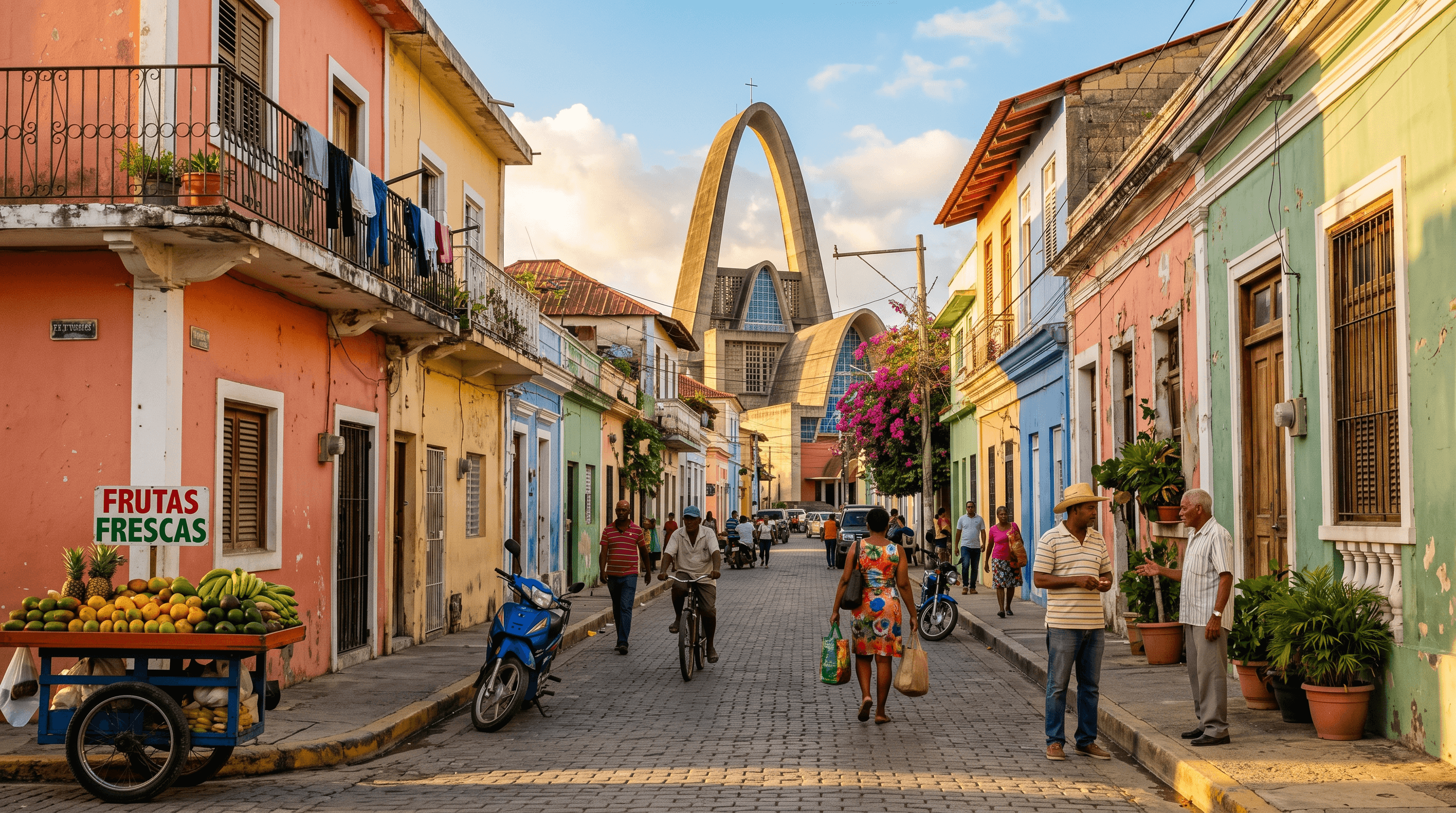
Most visitors to Punta Cana spend their entire trip inside a walled all-inclusive resort, separated from the actual country by security gates, manicured landscaping, and ten kilometers of paved access road. The resorts are excellent at what they do — comfortable, safe, beautiful, easy. But they're also a curated version of the Dominican Republic that's a little too clean and a little too quiet. The real country starts when you leave the gate.
This guide walks through the towns and cities near Punta Cana that show how Dominicans actually live, work, worship, and shop. Some are tourist-aware, some are not. All of them are worth at least half a day if you want a fuller picture of where you're staying. The most accessible options can be reached with a taxi; the more interesting ones benefit from a guided culture and nature excursion that handles transportation and adds context.
Higüey: The Religious Heart of the Region
Higüey is the largest city in the eastern Dominican Republic and the spiritual capital of the country. It sits about 40 kilometers inland from Punta Cana — a 45-minute drive on the highway — and houses the most important Catholic shrine in the country: the Basilica of Our Lady of Altagracia. Even if you're not Catholic, the basilica is worth visiting for the architecture alone. Designed by French architects and completed in 1971, the building is a soaring concrete arch shaped like praying hands, rising 80 meters above the surrounding plaza. The interior is open, light-filled, and acoustically remarkable.
The Virgin of Altagracia is the patron saint of the Dominican Republic, and on January 21 each year hundreds of thousands of pilgrims walk from across the country to Higüey for her feast day. On most days the basilica is quieter — locals lighting candles, families baptizing babies, occasional tour groups passing through. Mass is held multiple times daily. The plaza outside has vendors selling religious medals, candles, and snacks, and a series of small restaurants and cafes that serve unpretentious, affordable Dominican food.
What to See in Higüey Beyond the Basilica
The town's central park, Parque Central, is a few blocks from the basilica and is the kind of place where locals sit on benches, kids play, shoeshine workers ply their trade, and the rhythm of normal Dominican town life unfolds. The older Catholic church on the park, San Dionisio, was originally built in 1572 and is one of the oldest churches in the Americas. The market a few streets away is busy, loud, and entirely uncurated for tourists — produce, butchery, household goods, secondhand clothes, music blaring from a dozen speakers. It's not a tourist attraction; it's a working market, and walking through it for thirty minutes will teach you more about Dominican daily life than any number of guidebook entries.
Practical Information for Higüey
A taxi from a Punta Cana resort to Higüey costs $60 to $80 USD round trip, depending on how long you stay. The drive takes 45 minutes each way. You don't need a guide for the basilica itself — the visit is straightforward — but a Spanish-speaking driver or guide is helpful for the market and central park if you don't speak Spanish. Plan three to four hours for the round trip and the visit. The best time of day is mid-morning, before the heat peaks and after the morning commute settles.
Bayahibe: A Fishing Village That Became a Beach Town
Bayahibe sits about an hour southwest of Punta Cana and presents a different kind of trip. Originally a small fishing village, it's grown into a midsize beach town that retains far more of its original character than the resort zones. The village center is small enough to walk in twenty minutes — a stretch of beachfront restaurants, dive shops, fishing boats pulled up on the sand, a Catholic church, a few hotels. The water is exceptional — calm, clear, surrounded by reef. Bayahibe is the launching point for boat trips to Saona and Catalina Islands, and the Catalina day trip departs from here.
Spending half a day in Bayahibe rather than just passing through it is worthwhile. The village hosts a few good seafood restaurants where local fishermen sell directly. The fishing wharf in the early morning is a working scene — boats unloading, fish being sorted and weighed, dive operators preparing for the day's trips. Late afternoon brings out the local kids playing on the beach and the older men gathering at outdoor bars. Unlike the resort zones, Bayahibe has a population that lives there year-round, which gives it texture the resort areas lack.
La Romana and Altos de Chavón
La Romana is the third-largest city in the Dominican Republic and sits about 1 hour and 45 minutes west of Punta Cana. It's the home of the sugar industry that historically defined the eastern part of the country, and parts of the city still reflect that — large sugar mills, worker housing, an old industrial railway. But the reason most travelers visit La Romana is the Casa de Campo resort complex on its eastern edge, which contains one of the country's most remarkable cultural sites: Altos de Chavón.
Altos de Chavón is a recreation of a 16th-century Mediterranean village, built from local coral stone in the 1970s as a cultural project. The result is part theme park, part genuine art and design school. The buildings include a small church (where Frank Sinatra played a memorable concert at the village's opening), a 5,000-seat amphitheater modeled on Greek and Roman originals, a regional archaeological museum, and several artisan workshops where local craftspeople work with stone, ceramics, leather, and metal. The amphitheater hosts major concerts throughout the year.
Whether Altos de Chavón is your taste depends on how you feel about themed historic recreations. It's not authentic in the strict sense — it was built fifty years ago. But the craftsmanship is genuine, the views over the Chavón River below are spectacular, and the experience is unlike anything else in the country. The on-site restaurants are good, though not cheap.
Boca de Yuma: The Quiet Coast
Boca de Yuma is a small fishing village about an hour southwest of Punta Cana, at the mouth of the Yuma River where it meets the Caribbean Sea. It's the kind of place travelers find by accident and then return to deliberately. There are no resorts here, no large hotels, no all-inclusive infrastructure. Just a handful of small restaurants, a fishing wharf, dramatic coastal cliffs, and the cave systems of the East National Park visible across the water.
The village hosts an annual Caribbean fishing festival in late May that draws boats from across the region. The rest of the year it's quiet. Lunch at one of the cliffside restaurants — usually grilled lobster or whole fish, with whatever the boats brought in that morning — is one of the most memorable meals you can have in this part of the country. The drive from Punta Cana takes about an hour each way, with a few of the small towns and farms passing along the way that give a feel for inland Dominican life.
Macao Beach and the Northern Coast
If you want a stretch of beach that's been almost untouched by resort development, drive 30 minutes north of the main Punta Cana strip to Macao. The beach is long, broad, and backed by low cliffs and palm groves. It's a working beach — local Dominican families come here on weekends, surfers ride the small but consistent waves, beach vendors sell fish and coconuts directly to swimmers. The water is rougher than in the Bávaro resort zone (Atlantic, not Caribbean-protected), which gives Macao its own character. Several small beach restaurants serve fresh seafood at prices a fraction of what resorts charge.
Heading further north along the coast, you reach smaller communities — El Macao village, then the inland route toward El Seibo and the Cordillera Oriental. Most of this area is rural, with sugar cane fields, cattle ranches, and small farming towns. It's not the kind of place that supports a polished tourist itinerary, but a half-day driving loop through this area gives you a sense of the country's rural eastern interior that no resort experience can match.
Veron and Friusa: The Towns Where Resort Workers Live
Most resorts are staffed by people who don't live in the resort itself. They live in nearby towns — primarily Veron and Friusa — that have grown up specifically to support the tourism industry. These are not pretty colonial towns or charming villages. They're working-class commuter communities with rough roads, busy streets, and the everyday rhythm of working Dominican life.
But that's exactly what makes them worth visiting if you want context for where you're staying. The comedores where resort workers eat breakfast and lunch serve some of the best Dominican food in the area at a fraction of resort prices. The small shops sell produce and household goods at local prices. The barber shops, hair salons, and small mechanic shops show the actual commercial life of the region. A taxi ride through Veron in the late afternoon, watching the streets fill with workers coming off their shifts, is a different view of the area than the resort version.
If you go, go to eat lunch or breakfast at a comedor, and accept that the experience will be loud and busy. Don't expect tourist-friendly English or a polished welcome. You're a guest in a town that doesn't exist for tourism in the way Punta Cana itself does. The people are friendly, the food is excellent, and the prices are a fraction of what you'd pay inside a resort.
Santo Domingo: The Capital, If You Have a Full Day
Santo Domingo is the capital of the Dominican Republic and the oldest continuously inhabited European-founded city in the Americas, settled in 1496. It's a 2-hour-15-minute drive west of Punta Cana — long for a day trip but achievable. If you have a flexible schedule and want to understand the country, it's worth the trip. The Zona Colonial (Colonial Zone) is a UNESCO World Heritage site with 16th-century architecture, the first cathedral in the Americas (the Catedral Primada de América), the Alcázar de Colón (where Christopher Columbus's son lived), and a network of stone streets you can walk in a couple of hours.
Beyond the Colonial Zone, Santo Domingo is a modern, sprawling city of three million people with all the energy and chaos that implies. The Malecón seafront drive is dramatic. The food and music scenes are genuinely vibrant. The contrast with the resort areas is profound — you'll see actual urban Dominican life, with the wealth and the poverty that go with it. A day trip is intense; an overnight stay is better if you can manage it.
Practical Day-Trip Logistics
Most travelers do Santo Domingo as an organized day trip through an operator. The advantages: comfortable air-conditioned bus, English-speaking guide, all logistics handled, food included. The disadvantages: you see what the operator decides to show you, time at each stop is limited, the group sets the pace. If you want a deeper experience, hiring a private guide-driver is more expensive but gives you control. Either way, leaving the resort at 7:00 AM and returning by 8:00 PM is the typical day.
Why It's Worth Leaving the Resort
There's a real argument for staying in the resort the entire time. It's relaxing, comfortable, and you're not on vacation to deal with logistics. Many travelers come specifically for that experience and have a great time. But the people who tell us they really fell in love with the Dominican Republic — who came back, who learned Spanish, who eventually bought property here — are almost always the ones who spent some time outside the resort walls.
Even a half-day in Higüey, or an afternoon at Macao, or a lunch in Bayahibe changes how you understand the country. The resort experience is curated and pleasant. The country itself is louder, more complicated, more interesting. Both are real. Both are worth experiencing. If you're spending a week here and you don't venture outside even once, you're seeing one slice of a much larger and more interesting place.
Practical Tips for Leaving the Resort
- Bring small bills. Outside resorts, large US dollar notes are sometimes hard to break. A mix of $1, $5, $10, and $20 bills is most useful. Dominican pesos are best for small purchases.
- Travel light. Don't carry valuables you wouldn't want to lose. Take a phone, a small amount of cash, sunscreen, water, and a hat. Leave the rest in your hotel safe.
- Hire local taxis through your hotel concierge. Resort-arranged taxis are slightly more expensive than waving down a random one, but they're reliable, the driver speaks English, and the price is fixed before you go. For longer trips, this is worth the small premium.
- Don't drink tap water. Bottled water is cheap and available everywhere. Use it for drinking and brushing teeth outside the resort.
- Greet people. A simple "Buenos días" or "Buenas tardes" goes a long way. Dominicans are warm and friendly, and basic greetings open conversations and friendly service.
- Tip in cash, in pesos when possible. Standard tip is 10 percent in restaurants; small tips of 50 to 100 pesos for taxi drivers, bag handlers, and helpful staff are appreciated.
How to Build a Day Outside the Resort
If you have one day to leave the resort and want a balanced experience, here's a workable plan. Leave the resort at 8:30 AM. Drive 45 minutes to Higüey. Spend 90 minutes at the basilica and central park area, including coffee at a local café. Drive 30 minutes back toward the coast, stopping at a small roadside comedor for lunch (around noon, when Dominicans eat). Spend the afternoon at Macao Beach or Boca de Yuma, depending on your preference for swimming or coastal scenery. Return to the resort by 6:00 PM. Total cost for two people including taxi, food, and entrance fees: under $150 USD.
Alternatively, book a guided cultural and nature excursion that builds the day for you. The premium over going independently is real but reasonable, and you get someone managing all the logistics and providing context throughout.
Final Thoughts
Leaving the resort isn't required to have a great vacation in Punta Cana. The resorts are excellent and many travelers don't need anything beyond them. But the people who leave even once, even just for an afternoon in Higüey, almost always tell us afterward that the trip outside was the part they remembered most clearly. The country exists outside the gate. It's louder, less polished, more interesting. A few hours in it is one of the highest-value things you can do with your trip.
If you'd like recommendations specific to your interests — historical sites, food, beaches, music, family-friendly stops — contact our team and we'll suggest the right combination for your dates and group. We live in this country year-round and we know which places are worth your time. One last piece of practical advice: don't try to do too much. Many first-time visitors plan ambitious itineraries with three or four towns in a single day, and they come back exhausted having barely experienced any of them. One destination, done properly with time to walk around, eat a real meal, and talk to a few people, is worth more than three rushed stops. The Dominican Republic rewards slowness, and the moments that stay with you tend to be the ones you didn't plan — a conversation with a fruit vendor, the way the late afternoon light hits the basilica plaza, an unexpected stop at a roadside dulce stand. Build your day around being open to those moments rather than checking off destinations.