
Punta Cana with Toddlers and Babies: A Practical Guide
Practical guide to Punta Cana with babies and toddlers — resort picks, calm-water beaches, feeding, naps, medical care, and exactly what to pack.
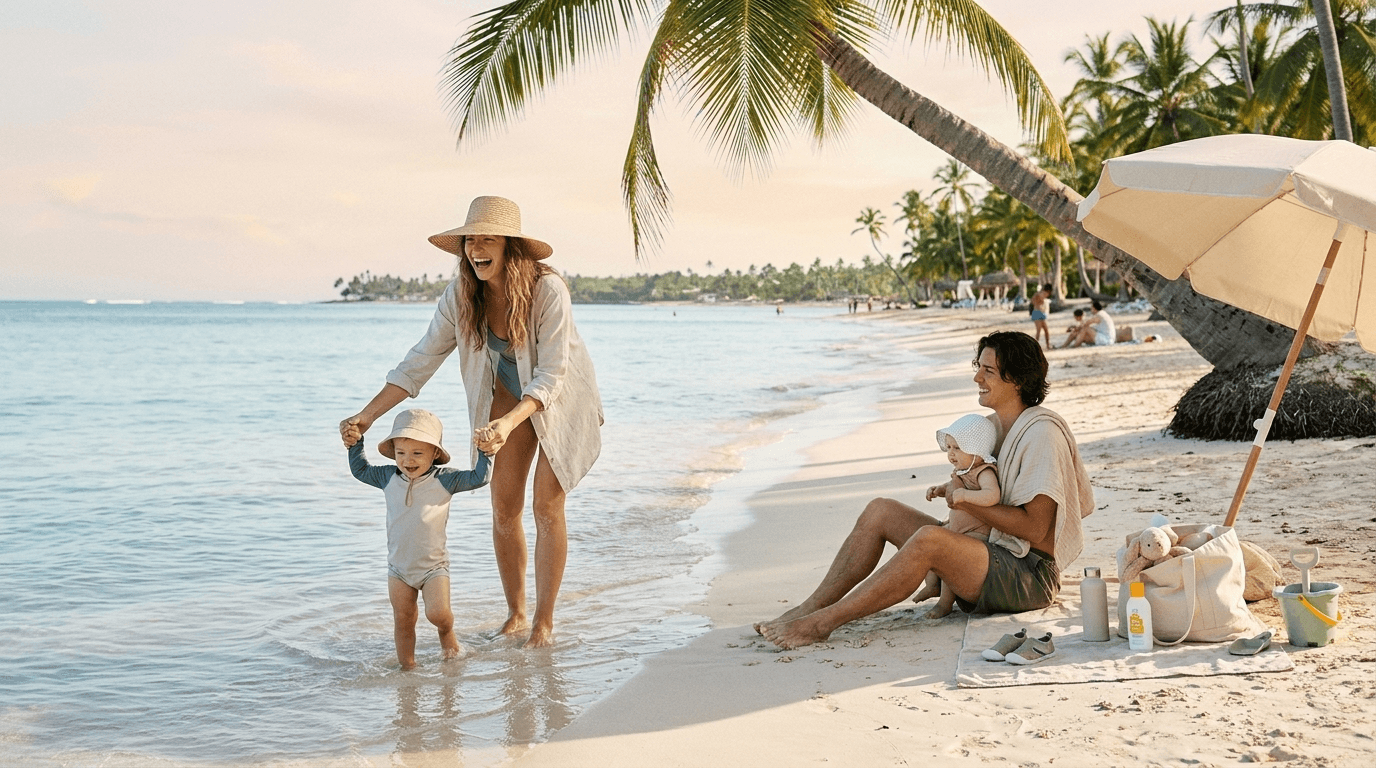
Traveling to Punta Cana with a baby or toddler is entirely doable, often delightful, and occasionally chaotic — exactly like traveling with a small child anywhere else. The Caribbean climate, the all-inclusive infrastructure, and the family-friendly resorts make Punta Cana one of the easier international destinations to navigate with young children. But there are real considerations that don't apply to childless travel: which resorts actually accommodate babies well, how to handle feeding and naps with a long flight, what medical setup exists, and which beach you choose matters more than usual.
This guide is written from practical, on-the-ground experience working with families who arrive with kids from a few months old up through age four. If you'd like help planning excursions or transfers that work with nap schedules and feeding times, contact our team — we coordinate with parents constantly and know what works.
Is Punta Cana a Good Destination for Babies and Toddlers?
Yes, with caveats. The positives are substantial: warm water, soft sand, predictable weather, English widely spoken at major resorts, modern medical facilities nearby, family-friendly all-inclusive infrastructure, and short flights from most of North America (3.5 hours from Miami, 4 from New York, 4.5 from Toronto, 5 from Montreal). The negatives are also real: strong sun that's unforgiving for fair-skinned children, mosquitos during certain seasons, water that you don't want to drink from the tap, and a general infrastructure that's designed for adults relaxing rather than parents managing toddler logistics.
The verdict for most families: a good resort plus thoughtful planning makes Punta Cana excellent. A poor resort choice or unrealistic expectations makes it stressful. The single most important decision you'll make is which resort, because that's where 70 percent of your time with a small child will actually happen.
Choosing the Right Resort
Not all Punta Cana resorts are equally toddler-friendly. The marketing language can be misleading — almost every resort says it's family-friendly because they all have a kids' pool and a kids' club. The features that actually matter for under-5 travelers are different.
Features That Actually Matter
- Calm-water beach access: Some Bávaro beaches have gentle, shallow water perfect for toddlers; others have stronger surf and steeper drop-offs. Cap Cana and certain stretches of Bávaro are calmer than the central Bávaro beach.
- Babysitting and childcare options: Resorts vary widely. Some offer formal babysitting starting at age 6 months, others only have group kids' clubs starting at age 4. Verify before booking if you need adult-only time.
- Cribs and high chairs available: Confirm with the resort directly before arrival, not just through your tour operator. Quantities are sometimes limited.
- Baby food and milk availability: Major resort buffets have plain rice, plain pasta, fruits, eggs, and yogurt. Specific baby food jars are not commonly stocked — bring what your child needs from home or accept that you'll feed adapted versions of resort food.
- Pool depth variety: A graduated pool with very shallow zones (15 to 30 cm) is much more useful than a single 1.2-meter pool with a separate kiddie splash area.
- Room layout: Suites with separate bedrooms or rooms with partitions are far more comfortable than studio-style rooms when you need to keep the lights low for early bedtime.
- On-site medical staff: Larger resorts have 24-hour clinics. Smaller boutique resorts may rely on call-out service. The difference matters at 2 AM with a feverish toddler.
Resort Categories to Consider
Family-focused major brands (Nickelodeon, Hyatt Ziva, Excellence's family properties, Iberostar Selection, certain Hard Rock configurations) lean into the family experience and tend to have the infrastructure above. Adults-oriented luxury resorts (Excellence Punta Cana adults-only, Sanctuary Cap Cana, Secrets) either don't allow children under 18 or actively discourage families. Mid-range all-inclusives are mixed — read recent family-specific reviews before committing.
Flying with Babies and Toddlers
Choosing Flight Times
If possible, fly during your child's natural sleep window. Overnight flights from Europe land in Punta Cana in the morning, which usually works well — the child sleeps en route and arrives ready for a normal-ish day. Daytime flights from North America are trickier because nap times collide with takeoff and landing. Early morning departures (so you arrive by early afternoon) are usually less stressful than evening arrivals, because you have daylight to handle the transfer and get to your resort while the child is still alert.
Documentation
Babies and children need their own passport. The Dominican Republic accepts most passports from major nationalities for tourism without a visa. Both parents traveling with the child only need passports; one parent traveling alone with the child sometimes needs a notarized consent letter from the other parent — check your home country's requirements and the airline's policy before flying. Single parents or divorced parents traveling internationally with a child are frequently asked for this letter at check-in.
Onboard Essentials
Pack twice as many diapers as you think you'll need. Bring a change of clothes for both the child and yourself (spit-up, leaks, and spilled food all happen). Pre-packaged snacks the child already likes are worth more than gold on a 4-hour flight. Tablet pre-loaded with familiar content, with headphones sized for small heads, prevents most boredom meltdowns. A small comfort item (lovey, blanket, pacifier) helps with ear pressure during descent — sucking, drinking from a bottle, or chewing a snack at descent reduces ear discomfort.
Best Beaches for Toddlers in the Punta Cana Area
The Punta Cana coast has multiple distinct beach zones with different conditions. For small children, calm water and gradual entry matter more than which resort is on the beach.
Cap Cana Beaches
Cap Cana (south of central Punta Cana) has some of the calmest, clearest water and a long flat entry that's ideal for toddlers. Juanillo Beach is the standout — gentle waves, soft sand, generally cleaner than central Bávaro on most days. The downside: Cap Cana resorts trend more expensive, and the area has fewer dining-out options.
Bávaro Beaches
Central Bávaro is the longest and most-developed beach strip. Conditions vary along its length — the southern end (near El Cortecito) sometimes has stronger surf, while the northern Bávaro stretches (Arena Gorda, Cabeza de Toro) tend to be calmer. Most family resorts cluster on Bávaro, which means lots of options but also crowded sections in peak season. Check the daily wave conditions; many resorts post beach flags.
Uvero Alto and Macao
These beaches north of Bávaro are less developed and often have more wave action — generally not ideal for very small toddlers, though older children who can play in the sand without needing to enter the water can be fine. The resorts in this area sometimes offer transfer service to calmer beaches.
Feeding a Baby or Toddler at a Resort
Resort buffets have plenty of baby- and toddler-appropriate food once you know what to look for. Plain rice, plain pasta, scrambled eggs, oatmeal, yogurt, sliced fruits (mango, papaya, banana, melon), boiled vegetables, grilled chicken, mashed potatoes, and bread are universally available. Specific brand-name baby food and formula are not commonly stocked at the resort gift shop — bring what your child specifically uses from home, or accept the trip will adapt your child's diet temporarily.
Formula and Bottle Feeding
Bring your child's specific formula brand. Resorts cannot reliably source international formula brands, and switching mid-trip can upset a sensitive baby. Use bottled water (provided in the room) for mixing formula, not tap water. Sterilize bottles either with your own travel sterilizer or by asking the resort's room service for boiling water. Most resorts will accommodate this request without issue.
Snacks Throughout the Day
Between meals, resorts have limited snack options — fruit and pastries are common but not always available between 11 AM and the next mealtime. Bring familiar snacks the child likes (cereal bars, crackers, dried fruit) for the inevitable hungry moments at the beach or pool. Avoid relying on the gift shop for these — markups are heavy and selection is narrow.
Naps, Schedules, and Sleep
Maintaining some semblance of your child's normal schedule is the single biggest difference between a relaxing trip and a difficult one. The trip will already disrupt timing somewhat (different time zone, late dinners, new environment, excitement) — protect what you can.
Room Strategy
Request a room with a separate sleeping area for the child if possible. Suites cost more but pay off when you can read or have a quiet conversation while the child sleeps. If you're in a single-room configuration, plan to be quiet in the room during the child's nap and bedtime, or to use the room only for the child's sleep and the lobby or pool deck for adult time. Bring a portable blackout curtain or large clip-up blanket if your child is light-sensitive — Caribbean light comes in earlier and brighter than at home.
Pool and Beach Timing
Mornings (8 to 11 AM) and late afternoons (3 to 6 PM) are the best times for pool and beach with small children. The sun is less intense, the heat is more manageable, and the kid is fresh. Midday (11 AM to 3 PM) is exactly the time you should be in shade or back in the room for a nap — this aligns conveniently with the strongest sun and a typical post-lunch nap.
Medical and Health Considerations
Pre-Trip Medical Prep
Check that routine vaccinations are up to date for the child. Bring a small first-aid kit with: children's pain and fever medicine (acetaminophen and ibuprofen) in age-appropriate dosing, oral rehydration salts, diaper rash cream, antibacterial cream for cuts, plasters, baby sunscreen (mineral-based for under-2s), bug spray formulated for children. Pack medications in carry-on, not checked bags. If your child takes prescription medication, bring more than enough for the trip plus a copy of the prescription.
Sun Protection
The Caribbean sun is significantly stronger than what most North American and European children experience at home. For babies under 6 months, the recommendation is to keep them out of direct sun entirely (shade, hat, long sleeves). For older babies and toddlers, mineral-based sunscreen (SPF 30+), wide-brim hat, UV-protective swim shirt ("rash guard"), and limited midday exposure. Reapply sunscreen every 90 minutes and after every water exposure — not the 2-hour adult interval. A bad sunburn on day one can ruin the entire week.
Water Safety
Toddlers and weak swimmers should wear coast-guard-approved life vests in pools, not just floaty arm bands. Drowning in toddlers is silent and fast. Adult supervision must be active and undistracted — no phones, no books, no conversations that take your eyes off the water. Most resort pools don't have lifeguards reliably positioned. The single biggest preventable risk on a Caribbean family trip is pool drowning, and it almost always happens during a moment when adults assume someone else is watching.
If Your Child Gets Sick
Common minor issues: heat rash (cool the child, light clothing), mild diarrhea (oral rehydration, BRAT diet if the child is old enough), fever (fluids, age-appropriate antipyretic, monitor). For anything more serious — high fever, persistent vomiting, breathing difficulty, severe rash, lethargy, dehydration signs — go to Hospiten Bávaro, which has English-speaking pediatric care available 24/7. Costs run $150 to $400+ USD for a clinic visit, paid upfront; travel insurance with medical coverage handles reimbursement.
Excursions with Babies and Toddlers
Not every Punta Cana excursion suits a baby or toddler, but several work well with the right planning. The general rule: shorter is better, calmer is better, and "can return to resort early" is better than "all-day commitment."
Excursions That Work Well
- Catamaran trips with short snorkel stops: Babies stay in shade on board with a parent while older toddlers can splash in the natural pool. Half-day trips work better than full-day.
- Beach-club day passes at gentler beaches: A change of scenery without the structure of a fixed excursion.
- Saona Island day trips: Long but the boat ride is shaded, the beach is calm, and the structure works for toddlers who can nap on the boat. Only consider if your child does well with new environments.
- Private excursions over group excursions: Worth the cost difference because you control the schedule and can return early or change plans.
Excursions to Skip Until Kids Are Older
- Buggy or quad bike tours (no age safety, dusty, jarring)
- Zip-lining (age restrictions and not appropriate for young children regardless)
- Deep-sea fishing (long, hot, no shade, often rough)
- Anything billed as "adventure" or "adrenaline" — these target older kids and adults
For family-appropriate excursions, we coordinate with parents on pickup times, return times, and what to expect — especially important when you're managing schedules with a small child.
What to Pack: A Practical List
- Diapers and wipes for the trip plus 25 percent extra (running out at midnight is real)
- Familiar formula or food in original packaging
- Mineral-based sunscreen (the resort sells some but selection is limited)
- Hat, UV swim shirt, and water shoes for the child
- Travel-sized comfort items: blanket, lovey, pacifier (bring duplicates)
- Tablet, headphones, and pre-downloaded content for flights and downtime
- Compact baby carrier or stroller — most resorts have walking paths, and a baby carrier is better than a stroller on the beach
- Portable blackout blanket or large dark cloth for windows if your child is light-sensitive
- Children's first-aid kit including thermometer and age-appropriate medications
- Sippy cups, bibs, and one set of plastic plates/spoons for resort meals
- Backup phone charger and power bank for the airport and excursions
- Travel insurance documentation including emergency contact numbers
Day-to-Day Practicalities
Laundry
Babies and toddlers go through clothes fast in a tropical climate — sand, food spills, sweat, pool water. Most resorts have paid laundry service ($15 to $30 USD per bag) and some offer self-service laundromats. For a week-long stay, plan to do at least one mid-trip wash. Quick-dry kids' clothes are worth packing because they handle hand-rinsing in the bathroom sink for small accidents. A few inexpensive packing cubes help separate clean from worn during the trip.
Crib Setup in the Room
Resort cribs vary in quality. Some are nearly-new pack-and-plays; others are older wooden cribs that meet local standards but may not match what you're used to at home. Inspect the crib on arrival, check that the mattress fits snugly, and request a replacement if anything seems unsafe. Many parents bring a fitted sheet from home — resort sheets are usually full-bed sized and don't fit cribs well. A small night light is useful for nighttime feedings without turning on overhead lights.
Stroller vs. Carrier Decision
Resort pathways are mostly paved and stroller-friendly, but beach access and most excursions are not. A lightweight stroller for resort grounds plus a soft-structured baby carrier for excursions, beach time, and uneven surfaces covers most situations. If you can only bring one, the carrier is more versatile.
Final Thoughts
Punta Cana with babies and toddlers works when you choose the right resort, pack the right essentials, protect schedules where you can, and adjust your expectations from "vacation" to "family travel" — which is different but can be wonderful in its own way. The Caribbean climate and resort infrastructure make this a much easier first-international-trip-with-a-small-child than many other destinations.
If you're planning a trip and want help coordinating excursions, transfers, or restaurant choices that work with a small child's schedule, contact us. We work with families constantly and can tell you what realistically works at your child's age. Some things sound great in a brochure but don't survive a 4-hour boat ride with a 2-year-old; we'll save you the trial and error.