
ATV & Buggy Tours in Punta Cana: Complete Guide
Everything you need to know about ATV and buggy tours in Punta Cana — the Macao Beach route, safety, what to wear, comparing operators, and how to book.
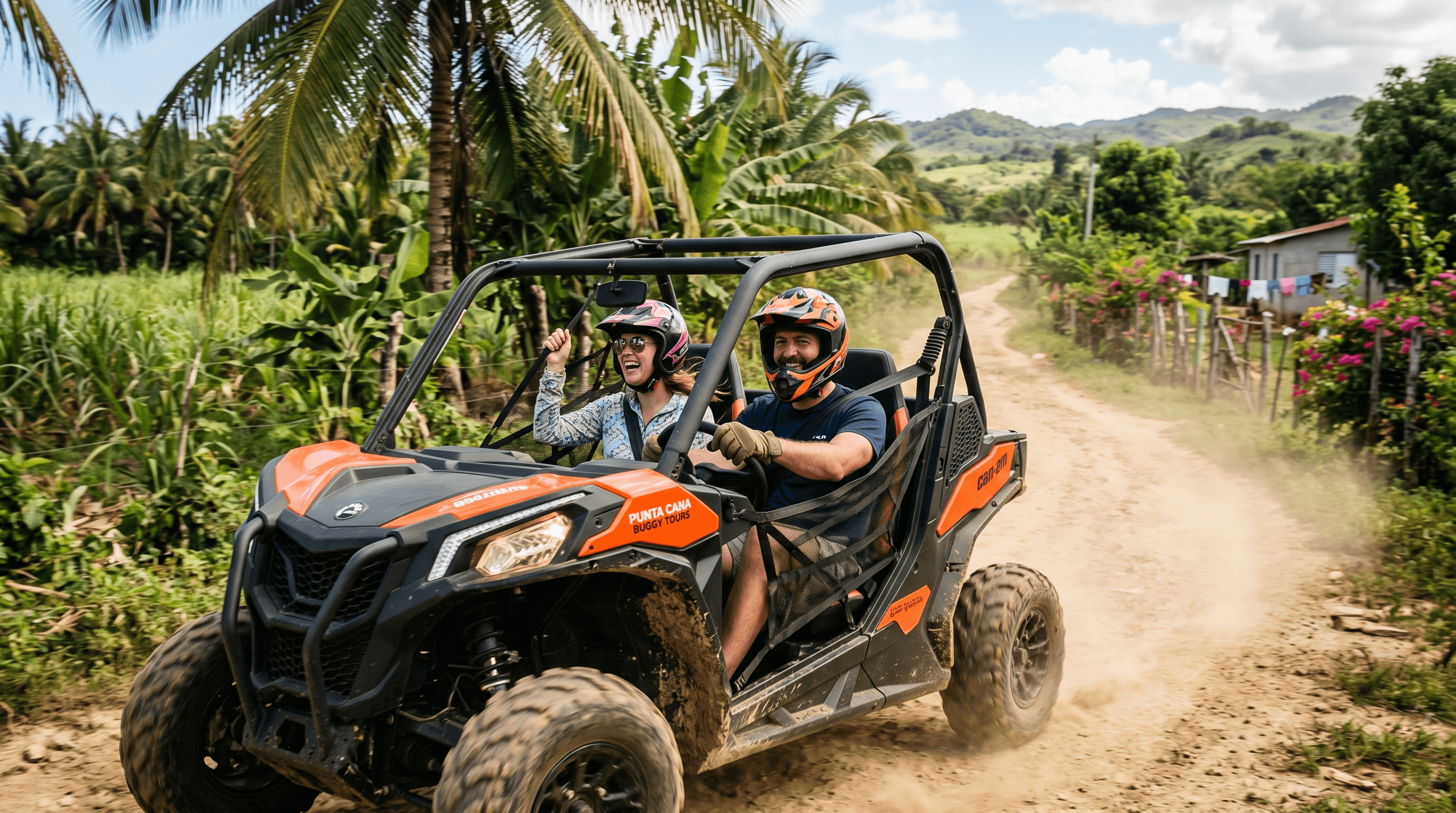
ATV and buggy tours are one of the most popular off-road excursions in Punta Cana — and one of the most variable in quality. A good operator runs a tour that's genuinely exciting, takes you through landscapes you'd never see from a resort, and ends with everyone smiling and a little sandy. A bad operator runs a tour that's dusty, loud, mechanically suspect, and oversold on the brochure. The differences matter for safety, for enjoyment, and for whether the experience lives up to what you imagined when you booked.
This guide walks through what an ATV and buggy excursion in Punta Cana actually involves, the typical route through Macao Beach and the sugar-cane countryside, how to choose between ATV, buggy, and UTV options, what to wear and bring, safety considerations, and how to spot a reputable operator. If you'd like help picking a tour that fits your group's experience level and comfort with off-road adventure, contact our team — we can match you with operators we know maintain their fleet properly and run their tours safely.
What an ATV & Buggy Tour in Punta Cana Actually Involves
The classic Punta Cana ATV or buggy excursion is a half-day tour (typically 3 to 5 hours including hotel pickup) that combines off-road driving through rural countryside, a stop at a traditional Dominican farm or cultural site, a swim at a freshwater cenote or natural cave, and finishing time at Macao Beach. It's one of the few excursions that gets you off the resort strip and into the inland landscapes most visitors never see.
Operators run tours from ranches and bases scattered around the Bávaro and Macao areas. The route varies slightly by operator but follows the same general pattern: leaving the hotel pickup zone, your guide leads a convoy of vehicles through paved roads to the off-road trail entrance, then onto dirt tracks through sugar cane, palm plantations, and small countryside villages. Mud, dust, and varied terrain are part of the experience — these tours are not about manicured trails.
The Typical Route: Macao Beach, the Cenote, and the Countryside
The tour finishes at one of the few largely undeveloped beaches near Punta Cana — Playa Macao is one of the area's most photographed natural spots, with no resorts directly on the beach and frequently used as a Caribbean stand-in for movies and commercials.
The Off-Road Section
Most tours leave a base or ranch around 8 AM, 12 PM, or 3 PM and spend the first 60 to 90 minutes driving the off-road segment. This passes through Dominican countryside — sugar cane fields, scrubland, palm groves, and the occasional rural settlement. The trails are unpaved, often muddy after rain, and have enough bumps and small obstacles to feel adventurous without being technical. Guides set the pace and lead the convoy; you don't need off-road experience.
The Cultural Stop
Most operators include a stop at a traditional Dominican home or small farm — sometimes branded as a "ranch" — where you'll sample coffee, chocolate, mamajuana (the local herb-infused rum drink), and learn about local agriculture (cacao processing, coffee growing, tobacco). These stops are partly cultural and partly retail (there's usually a small shop selling the same items). The experience is interesting on a first visit, less so if you've done several similar excursions.
The Cenote or Cave Swim
Most tours include a stop at a freshwater cenote (a natural pool fed by underground springs) for a 20 to 40 minute swim. The water is refreshingly cold compared to the warm Caribbean and provides a welcome rinse from the dust of the off-road section. The cenotes used by Punta Cana excursions are typically modest — small pools rather than the dramatic underground caverns of Mexico's Yucatán — but they're genuinely beautiful and the swim is one of the highlights of most tours.
Macao Beach
The tour finishes at Macao Beach, one of the few largely undeveloped beaches near Punta Cana. It's a long stretch of golden sand and turquoise water with no resorts directly on the beach, frequently used as a Caribbean stand-in for movies and commercials. Tours typically allow 30 to 60 minutes here for photos, walking, and dipping in the surf. The waves at Macao are bigger than at the resort beaches because it's not in the protected reef zone — fine for splashing but not ideal for serious swimming with young children.
ATV vs Buggy vs UTV: Which to Choose
Operators offer several vehicle types under names that vary by operator and aren't standardized across the industry. Understanding the basic differences helps you book the right thing.
ATV (All-Terrain Vehicle, also called Quad)
A single-person four-wheeled motorcycle-style vehicle with handlebars and a seat you straddle. The driver steers with handlebars and controls throttle with a thumb lever. ATVs are the most exposed and dynamic option — you feel the trail directly, the dust hits you fully, and you have the most agile handling. They're typically the cheapest option and the most fun for drivers comfortable with motorcycle-style controls.
Dune Buggy (Side-by-Side)
A two-seat open vehicle with a steering wheel, two pedals, and a roll cage. Buggies are easier to drive (car-like controls), more comfortable for couples and friends sharing a vehicle, and offer some protection from dust and sun via the cage and partial roof. They're the most popular option for first-timers and couples.
UTV (Utility Task Vehicle, e.g. Polaris, Can-Am)
A larger 2-to-4 seat vehicle, similar to a buggy but typically with more refined suspension, doors, and weather protection. UTVs are the most comfortable option and the choice for families with kids riding as passengers. They're also the most expensive. Common brand names in Punta Cana operator fleets include Polaris, Can-Am, Honda Pioneer, and Kayo.
What to Pick
For couples or friend pairs who want the easiest experience: a 2-person buggy. For solo travelers who want maximum adventure feel: an ATV. For families with kids 8 to 14: a 4-person UTV with the kids as passengers. Drivers must usually be 16 or older with a valid driver's license; some operators allow 18+ only. Passengers can be younger but check each operator's policy — typically kids 6 to 8 minimum as passengers, depending on vehicle.
Who Can Drive and Who Can Ride
Driver requirements vary by operator but generally: minimum age 16 or 18 (most often 18), valid driver's license required, basic familiarity with motorized vehicles assumed. Passengers can be younger — most operators accept passengers from age 6 to 8 upward in a buggy or UTV. ATVs are typically single-rider, so kids who can't drive can't ride pillion on an ATV.
Pediatric and trauma medicine groups recommend stricter ATV restrictions for children. The American Academy of Pediatrics and CDC specifically recommend that no child under 16 should operate or ride as a passenger on an ATV. This is more conservative than what most tour operators allow. Many families compromise by putting younger kids in buggies and UTVs (which have roll cages, seatbelts, and lower rollover risk) rather than on traditional ATVs. The risk profile is genuinely different between vehicle types.
Safety Considerations: What to Know Before You Ride
ATV-related injuries are a significant public health issue, particularly for inexperienced riders. The ATV Safety Institute (the industry's main safety body) maintains free online training resources and recommends specific protective equipment for all riders. The risks on a guided tour are lower than for unsupervised recreational riding, but they're not zero — rollovers, collisions between vehicles in the convoy, and falls during dismounts are the most common incident types.
Operator Safety Markers
- Helmets provided and required for all riders: Non-negotiable. A helmet that fits properly (not the universal-one-size flop) is the single most important safety equipment. The UPMC Children's Hospital ATV safety guide specifies that helmets must have eye protection or face guards for off-road riding.
- Pre-tour safety briefing: A real briefing covers vehicle controls, hand signals from the lead guide, what to do if you have a problem, and the route. A 30-second "just follow the leader" briefing is a warning sign.
- Modern, well-maintained fleet: Visible inspection of tires, brakes, suspension, and steering. Vehicles that look beaten up usually are.
- Reasonable group sizes: A guide leading 6 to 10 vehicles can supervise effectively. A guide leading 20 cannot. Larger groups also create more dust for the riders at the back.
- Insurance coverage: Reputable operators carry liability insurance. Ask before booking, especially if you have an underlying medical condition.
- Sober drivers: Most operators won't tour anyone who appears intoxicated. Driving an ATV or buggy with alcohol or recent cannabis use is genuinely dangerous; don't argue if you're refused service.
What to Wear and Bring
- Clothes you don't mind ruining: Mud is part of the experience and you will get dirty. The white linen sundress is not the right choice. Closed-toe shoes are required (no flip-flops or sandals on the off-road section).
- Sunglasses or eye protection: Operators provide some eye protection but the quality is variable. Bringing your own polarized sunglasses helps with both sun and dust.
- Bandana or neck gaiter: Critical for breathing comfortably through the dust on the off-road section, especially if you have any respiratory sensitivity. The dust is worse than most people anticipate.
- Swimsuit under your clothes: For the cenote stop and Macao Beach. A small towel folded into a bag also helps.
- Sunscreen and reef-safe options for Macao: Mineral sunscreens are kinder to ocean ecosystems where you'll swim.
- Small waterproof bag or dry bag: For phone, hotel key, and wallet during the cenote swim.
- Water bottle: Operators provide water but having your own is convenient. Stay hydrated; the Caribbean sun and physical activity are dehydrating.
- Cash for tips and souvenirs: Guides depend significantly on tips. 10 to 20 USD per vehicle is standard for a good tour. Cultural-stop souvenirs run 10 to 30 USD if you want to buy something.
The Dust and Weather Reality
Two things to set expectations on. First, the dust on the off-road section is significant — finer and more pervasive than you might expect. You'll inhale some of it, your hair will be coated, your eyes will sting periodically. People with asthma or respiratory sensitivity should consider this carefully and bring proper face covering. After heavy rain the dust becomes mud, which is messier but actually more comfortable to breathe through.
Second, rain doesn't usually cancel tours but changes the experience. Light to moderate rain makes the trails more interesting (mud splash photos are genuinely fun) and reduces the dust. Heavy rain or storms get tours canceled, with operators rescheduling to the next available slot. Hurricane season (June through November) sees more cancellations than dry season; book with some flexibility around weather if traveling in the rainy months.
Comparing Operators in Punta Cana
There are dozens of ATV and buggy operators in the Punta Cana area. Quality varies enormously. Use these signals to differentiate:
Good Signs
- Transparent pricing in writing: Total cost including hotel pickup, equipment, drinks, photos (or clearly priced photo packages), and any park fees.
- Recent fleet photos: Look at the operator's website or social media for actual photos of their vehicles (not stock photos from Google). Vehicles should look maintained, with intact safety equipment.
- Recent reviews mentioning safety and equipment quality: TripAdvisor and Google reviews from the last 6 months are more useful than older reviews. Look for specific mentions of helmets, briefings, and vehicle condition.
- Hotel pickup included: Standard for legitimate operators. Operators that require you to find your own way to a remote ranch are often the lower-quality ones.
- Multilingual guides available: For non-English non-Spanish speakers, ask in advance whether a French/German/Italian-speaking guide can be assigned.
Red Flags
Avoid operators that pressure you to book on the beach with unclear pricing, that won't provide an operator name to verify online, that quote suspiciously low prices (under 50 USD per person), that don't ask about your driving experience before booking, or that have a fleet that looks abandoned in photos. The Punta Cana beach tout scene has many low-quality operators that aggressively undercut legitimate ones; the difference is usually visible in equipment, safety standards, and insurance coverage.
Costs and What to Expect to Pay
Punta Cana ATV and buggy tour pricing typically runs as follows: shared 2-person buggy at 80 to 110 USD per person (the most common option), single ATV at 70 to 90 USD per person, 4-person UTV at 60 to 80 USD per person (or per seat). Private tours (your group only, no other guests) run 150 to 250 USD per vehicle. Premium operators with newer fleets and smaller group sizes charge 20 to 30 percent more than the budget options.
Included in standard pricing: hotel pickup and drop-off, helmet and basic safety gear, water during the tour, the cenote stop (entry fees included), guide service, and basic insurance. Often not included: photos and videos taken by the operator's photographer (typically 20 to 50 USD for the package), souvenirs at the cultural stop, tips, and additional vehicle options. The best operators are clear about all costs upfront; sketchy operators have a habit of adding fees after you arrive at the ranch.
Booking Tips and What to Avoid
Book in advance during high season (December through April) — the better operators sell out 3 to 5 days ahead. Off-season booking can usually be done the day before. Morning tours (8 to 9 AM) are typically less crowded and cooler than afternoon tours; the 3 PM tour gets the best sunset light at Macao Beach but the hottest mid-tour conditions.
Avoid booking with beach hawkers offering same-day tours at unbelievable prices — these are often poorly equipped operators using rented vehicles, or they're middlemen marking up real operators' prices. Book through your hotel concierge or directly with an established operator's website. Verify the operator name, search recent reviews, and confirm pickup details in writing before paying.
Medical Considerations: Who Should Reconsider
ATV and buggy tours are physically demanding in subtle ways. You're jolted around for 90 minutes on uneven terrain, breathing dust, in direct sun, with adrenaline elevating your heart rate. For most people this is fine and fun. For some it isn't.
Conditions that warrant rethinking an ATV or buggy tour include: recent back, neck, or spine injuries (the jolting is rough on healing tissue); recent surgery (especially abdominal); pregnancy (most operators won't accept pregnant passengers); severe asthma or respiratory conditions sensitive to dust; cardiac conditions with exertion limits; uncontrolled hypertension; and any condition where head injury would be unusually serious. Trauma center summaries like the UNC Tar Heel Trauma ATV safety guide note that even with helmets and operator supervision, ATV-related incidents can involve falls and rollovers, so passengers with these conditions should consider a gentler alternative like a guided horseback tour or catamaran trip. There are many ways to see Macao Beach; the buggy tour is one of them, not the only one.
Final Thoughts
ATV and buggy tours in Punta Cana are genuinely fun excursions that get you into landscapes you'd otherwise miss. The mix of off-road driving, the cenote swim, and the wide-open Macao Beach is a satisfying combination, and most travelers come back with memorable photos and stories. The key is choosing an operator that takes safety and equipment quality seriously, dressing for the dust and mud, and setting realistic expectations about what an off-road tour actually involves.
If you'd like help selecting and booking the right ATV or buggy tour for your group, contact us with your travel dates, group composition, and what level of intensity you're after. We'll pair you with an operator that runs a clean, safe tour and skip the ones that don't.