
Best Snorkeling Spots in Punta Cana: A Complete Guide
Where to snorkel in Punta Cana — Catalina, Saona, Bayahibe, Cabeza de Toro, Cap Cana. What you'll see, how to book, reef-safe practices and family tips.
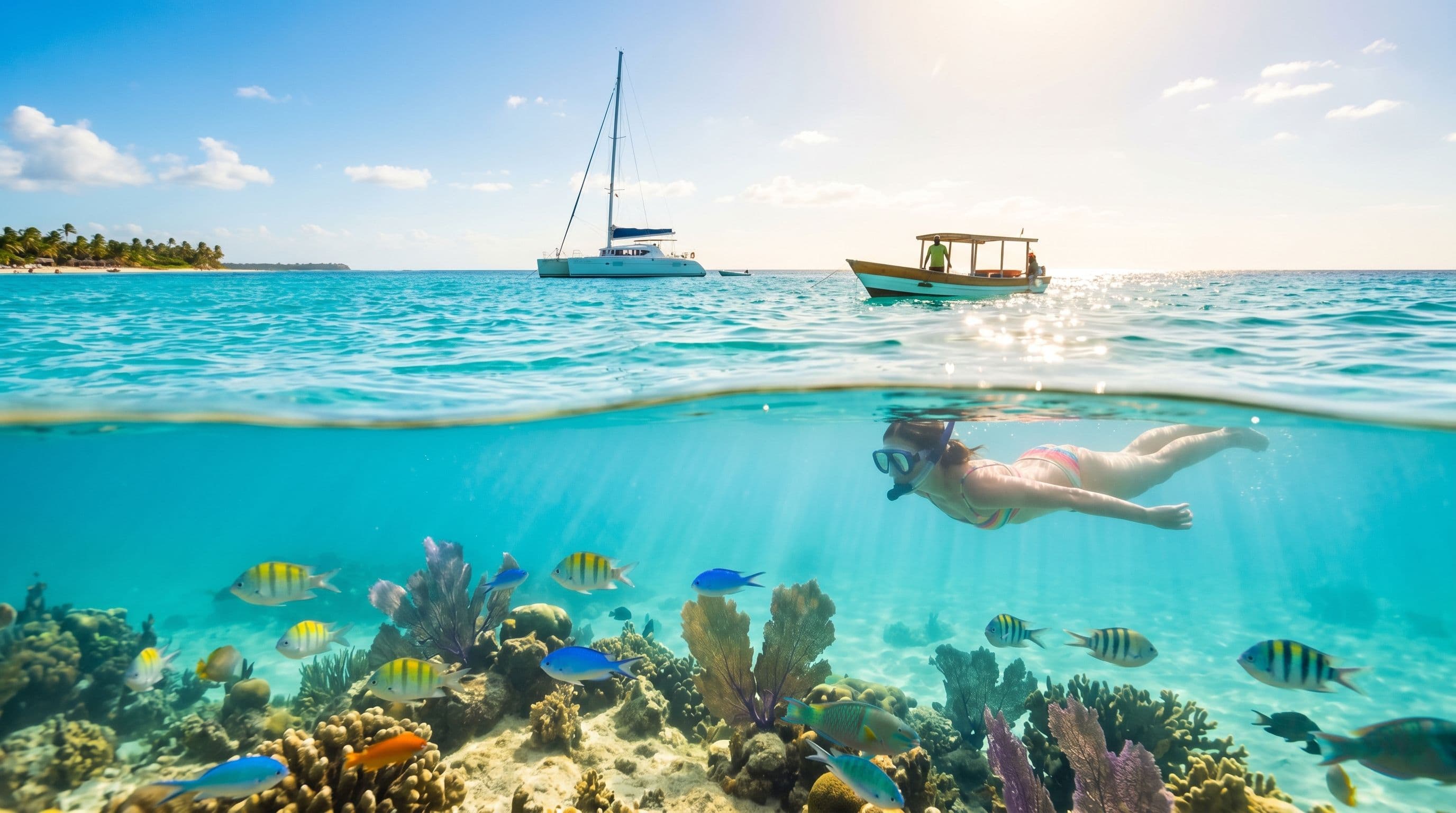
Snorkeling in Punta Cana is one of those activities where a small amount of planning produces a much better day. The waters off the eastern Dominican Republic look gorgeous from the resort beach, but the snorkeling experience varies enormously depending on which spot you choose, what time of day you go, and what your expectations are. Some locations have shallow reefs alive with tropical fish; others are mostly sand with a few isolated rocks. Some are 5 minutes from your hotel; others require a 90-minute boat ride. This guide breaks down the snorkeling options that genuinely deliver, written from years of running excursions out of Cabeza de Toro and working with the dive centers around the region.
If you'd prefer to skip the research and have us arrange snorkeling that matches your skill level, group composition, and dates, contact our team — we can pair you with the operator and location that actually fits.
Understanding Punta Cana's Snorkeling Geography
The Punta Cana region sits at the eastern tip of the Dominican Republic, where the Atlantic meets the Caribbean. The water is warm year-round (26 to 29 degrees Celsius, 79 to 84 Fahrenheit), visibility is generally good (15 to 30 meters on calm days), and tropical reef species are abundant. But the best snorkeling isn't always directly off the resort beach.
The most productive snorkeling spots are concentrated in two zones: the protected reefs and islands south of Punta Cana (Catalina Island, Saona Island, Bayahibe reefs — all within or adjacent to Cotubanamá National Park, one of the country's largest protected marine areas), and the close-to-shore reefs of the Punta Cana coast itself (Cabeza de Toro, parts of Cap Cana). Each has trade-offs in travel time, marine life density, and crowd levels.
Catalina Island and the Catalina Wall
Catalina Island is a small uninhabited island roughly 90 minutes by road from Punta Cana, then a short boat ride from the La Romana coast. It's widely regarded as one of the best snorkeling destinations in the Dominican Republic. The Catalina Wall — a sloping reef that starts in 3 to 5 meters of water and drops steeply to depth — is the highlight. Snorkelers stay in the shallow zone where the reef structure is most visible, while divers explore the deeper wall below.
Expect to see large schools of grunt, snapper, and chromis; parrotfish working over the coral; sergeant majors patrolling in numbers; and frequently barracuda, eagle rays, or moray eels. The reef itself is healthier than many Caribbean sites because the location sits inside the boundaries of Cotubanamá National Park, where protections limit fishing and anchoring damage. Catalina works for confident beginners and is excellent for intermediate snorkelers; it's also a popular day trip for divers because the wall structure makes for spectacular underwater scenery.
Saona Island and Surrounding Reefs
Saona Island is the most famous day-trip destination from Punta Cana, drawing hundreds of visitors daily. The island itself is a national-park-protected paradise of white-sand beaches and coconut palms, but the snorkeling that comes with most Saona trips is the secondary experience — the Piscina Natural (Natural Pool), a shallow sandbar in the open sea where boats anchor between snorkeling stops.
Honest assessment: the snorkeling on a standard Saona day trip is decent but not exceptional. The Natural Pool is a shallow sand area with starfish and limited reef life — beautiful for photos but not a high-density marine encounter. The actual reef stops some operators include on the way to Saona are better, but the experience depends heavily on which operator you book and what their itinerary includes. If snorkeling is your priority, Catalina or Bayahibe-area reefs are stronger choices than Saona; if you want a beach day with some snorkeling, Saona delivers.
Saona sits inside Cotubanamá National Park, so you'll pay a small park entrance fee that goes toward marine and terrestrial conservation. This is included in most organized excursion prices.
Bayahibe Reefs and Shipwreck Snorkeling
Bayahibe — a small fishing village turned dive hub about 90 minutes from Punta Cana — is the Dominican Republic's most established diving destination, and the surrounding reefs offer excellent snorkeling too. The shore-accessible reefs at Dominicus and Bayahibe Beach are shallow, alive, and easy to reach without a boat. For boat-based snorkeling, several operators run trips to shallow reefs in the area.
The St. George wreck — a 73-meter cargo ship intentionally sunk in 1999 to create an artificial reef — sits in 35 to 45 meters of water, which is dive-only depth. However, the surrounding reef ecosystem that's grown around the wreck has spread into shallower water, and several operators include shallow reef stops near the wreck site on combination trips. For dedicated wreck snorkeling rather than diving, the Atlantic Princess (a smaller wreck in shallower water) is a better target. Bayahibe is also the entry point for trips to Catalina and Saona, so a Bayahibe-based excursion often packages multiple snorkeling stops in one day.
Cabeza de Toro and the Punta Cana Coast
If you don't want to spend an entire day traveling for a reef, the close-to-shore options matter. The Cabeza de Toro area — roughly between central Bávaro and Cap Cana — has a reef system that runs parallel to the coast and is accessible from beach-launched catamarans and small boats in 15 to 30 minutes. The reef here is in moderate health: not pristine, but with enough fish life to make a half-day excursion worthwhile, especially if you've never snorkeled a reef before.
Several Punta Cana catamaran excursions include a snorkel stop at this reef as part of a larger half-day or full-day trip. You'll typically see schools of sergeant majors, parrotfish, occasional barracuda, and a variety of smaller reef fish. The coral coverage isn't as spectacular as Catalina, but the proximity (you can be back at your resort by 2 PM) makes it the most practical snorkeling option for people staying in central Punta Cana who don't want to commit to a full day of travel.
Cap Cana and Juanillo Beach
Cap Cana, the upscale area south of central Punta Cana, has cleaner water and clearer visibility than the more developed northern Bávaro beaches. Juanillo Beach in particular has some nearshore rocky areas where small reef communities live, and operators in the area run short snorkel trips to spots a few hundred meters offshore. This is the easy option for people staying in Cap Cana resorts who want a low-effort snorkeling experience without committing to a full-day excursion. The marine life is less dense than at the protected sites further south, but the convenience is unmatched.
What You'll See: Marine Life by Spot
Different sites have different reliable sightings. A rough guide to set expectations:
- Tropical reef fish (sergeant majors, blue tang, parrotfish, grunts, snappers, butterflyfish): Present at all sites in good numbers. These are the bread-and-butter of Caribbean snorkeling.
- Barracuda: Common at Catalina Wall, Saona-area reefs, and the St. George wreck site. Harmless to snorkelers; impressive to see.
- Stingrays: Frequently spotted at the Natural Pool near Saona and at Catalina.
- Eagle rays: Less common but seen at Catalina and Bayahibe reefs, usually in winter months.
- Sea turtles (hawksbill, green): Occasional sightings at all sites; more frequent in deeper Catalina dives than at typical snorkel depth, though shore turtles do appear in Cap Cana and Cabeza de Toro.
- Nurse sharks: Resident populations near Bayahibe and some Saona-area reefs; harmless to swimmers but worth knowing about.
- Moray eels: Hidden in reef crevices at most sites — look carefully into the holes.
- Starfish: Concentrated at sand-bottom stops like the Natural Pool; please don't touch or lift them out of water (it kills them within minutes).
Snorkeling Gear and Skills
Renting vs. Bringing Your Own
Most snorkeling excursions include basic mask, snorkel, and fins in the price, but the quality is variable. Rented masks often leak, fog, or don't fit well, which can ruin the experience. If you snorkel frequently, bringing your own mask and snorkel is the single best upgrade — a well-fitting mask transforms a frustrating session into an immersive one. Fins are bulkier to pack but also significantly nicer if you bring your own.
Skill Requirements
Basic snorkeling is genuinely easy and most adults pick it up in 20 minutes with a brief introduction. The skills that matter: comfortable face-in-water breathing, basic finning, and the ability to clear water from a snorkel tube by exhaling sharply. If you've never snorkeled, the resort pool is a great place to practice for 30 minutes before your excursion. Many guides will offer a quick instructional session for first-timers on the boat.
Life Vests and Floatation
Most operators offer optional life vests, and you should use one if you're not a strong swimmer. There's no shame in it — even strong snorkelers sometimes use float belts for relaxed buoyancy. For weak swimmers and children, life vests are non-negotiable. Combined with a snorkel mask, you can spend hours face-down on the surface without any swimming effort, just looking down at the reef.
Reef-Safe Sunscreen and Coral Protection
This matters more than most snorkelers realize. Conventional sunscreens contain oxybenzone and octinoxate, chemicals that accumulate in reef ecosystems and contribute to coral bleaching and reef decline. The US National Park Service recommends mineral-based sunscreens with only zinc oxide or titanium dioxide for any visit to reef areas. The Dominican Republic has not banned chemical sunscreens (Hawaii and several Pacific destinations have), but the impact is the same wherever reefs exist.
What this means practically: buy a reef-safe mineral sunscreen before your trip (Caribbean gift shops carry them but at premium prices), or apply chemical sunscreen at the resort well before your excursion so it absorbs before you enter the water. Better yet, use a long-sleeve UV-rated rash guard, which provides better sun protection than any sunscreen and zero ocean impact. Sustainable Travel International estimates that 8,000 to 16,000 tons of sunscreen enter reef ecosystems globally each year. Choosing differently is a small action with a real cumulative effect.
Snorkeling Etiquette and Reef Protection
- Don't touch the coral: Coral is a living organism. Touching it (even briefly) damages the protective layer and can cause infection or death of that section. Maintain at least 30 cm of clearance from all reef surfaces.
- Don't stand on the reef: This is more damaging than touching. If you need to rest, swim to a sandy area or hold onto your boat's line.
- Don't chase or touch wildlife: Fish, turtles, rays, and other marine life flee predators. Approaching them stresses them and reduces the quality of the experience for everyone behind you.
- Don't feed the fish: Many operators discourage or prohibit this. It disrupts natural feeding patterns and creates aggressive behaviors over time.
- Watch your fins: A casually placed fin kick can break centuries of coral growth in an instant. Be aware of your body's position relative to the reef.
- Take only photos: Don't collect shells, coral pieces, or any marine life as souvenirs — most of this is illegal to remove from protected areas anyway.
- Pick up trash: If you see plastic or debris underwater, take it with you when you surface. Small actions add up.
Best Time of Day and Year
Morning snorkeling (departures between 8 and 10 AM) is consistently better than afternoon. The sea is typically calmer, visibility is better before afternoon winds churn up sediment, and the sun is at a comfortable angle for underwater photography. Afternoon snorkeling can still be good, but plan for slightly choppier conditions and potentially reduced visibility.
Seasonally, the calmest seas and best visibility are December through April, which also happens to be high tourist season. May and June can be excellent with fewer crowds. July through October sees occasional storms (afternoon thunderstorms, the tail end of hurricane season) that can affect water clarity. Visibility under 10 meters is rare year-round but possible after heavy rain or rough weather.
Snorkeling with Kids and First-Timers
Punta Cana is one of the better Caribbean destinations for introducing kids and beginners to snorkeling because the calm-water locations are abundant and the operators that handle family groups are experienced. A few practical considerations make first-time snorkeling go smoothly.
Ages and Equipment Sizing
Kids from about age 5 onward can manage basic snorkeling with proper supervision. Below that age, a child can still enjoy the water with a life vest and a parent holding their hand, but the breathing-through-a-tube coordination is genuinely hard for younger children. Properly fitted gear matters enormously here — adult masks don't seal on a child's face, and oversized fins are frustrating and inefficient. Look for operators that explicitly stock kid-sized equipment. If you can, buy a child-specific snorkel set before the trip; the cost is modest and the experience improvement is substantial.
Practice in the Pool First
The resort pool is the perfect place to introduce snorkeling. Twenty minutes of practice — getting comfortable with the mask seal, learning to breathe through the snorkel tube without panic, practicing the head-down floating position — turns an open-water session from stressful into easy. For nervous first-timers, this practice session is the single most useful thing you can do before any reef trip.
Beginner-Friendly Locations
Not all the spots above are equally beginner-friendly. The Natural Pool near Saona is excellent for true beginners because the water is chest-deep and you can stand up if anxious. Cabeza de Toro catamaran stops are typically beginner-friendly with calm conditions and life vests provided. Catalina Wall is also fine for beginners on calm days because the snorkel zone is shallow, but the open-water environment can feel intimidating to first-timers. Save Catalina for the second snorkel of the trip if possible.
Booking a Snorkeling Excursion
The most common Punta Cana snorkeling excursions are: catamaran trips with a single snorkel stop on a reef near Cabeza de Toro or Bávaro (half-day, easy), full-day boat trips to Catalina Island with multiple stops including snorkeling (longer but reef-rich), full-day Saona Island excursions with one or two snorkel stops (beach-focused with snorkeling as bonus), and dedicated multi-stop snorkeling trips from Bayahibe (the most snorkel-focused option, requires the drive to Bayahibe).
Choose based on your priorities: best reef snorkeling and you have time, do Catalina; want a memorable beach day with some snorkeling, do Saona; just want a fun half-day with a reef stop, do a Cabeza de Toro catamaran. Avoid the cheap beach-vendor snorkel deals at the resort — they often have poor equipment, overcrowded boats, or no actual reef stop. Book through your hotel concierge or an established operator's website.
Final Thoughts
Punta Cana offers some of the Caribbean's best accessible snorkeling, but knowing which spot to choose makes the difference between a memorable day and an underwhelming one. Catalina for the best reef. Bayahibe for variety and dive culture. Saona for the beach experience. Cabeza de Toro for proximity. Each has its place; matching your snorkel choice to your priorities and time available is the trick.
If you'd like help selecting and booking the right snorkeling excursion for your group, contact us with your travel dates, hotel location, and what level of effort you're up for. We'll match you with an operator that we know runs a clean, safe, fish-rich trip — and skip the ones that don't.