
The Best Time to Visit Punta Cana: A Month-by-Month Guide
Punta Cana weather, prices, crowds, and conditions broken down month by month — with honest advice on when to go for the best value, the best weather, and the right experience for your travel style.
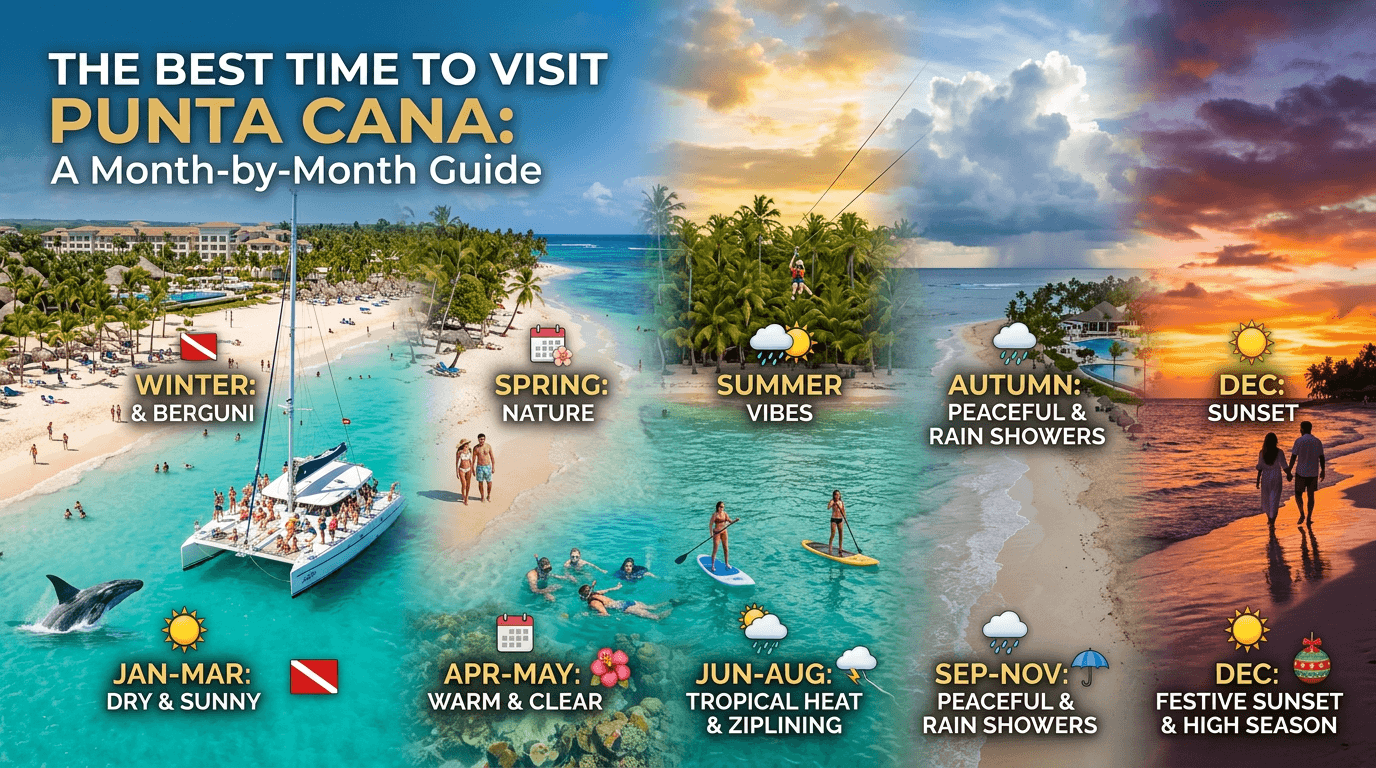
Punta Cana is a year-round destination — there's no month when you can't have a great time here. But the experience changes significantly across the calendar, and the difference between booking in February versus September is bigger than most travelers realize. Air temperature, water temperature, crowd levels, hotel pricing, hurricane risk, and even which excursions run consistently all shift by season.
This guide goes month by month with honest information about each, written by people who live here year-round. Use it to match your priorities — budget, weather, low crowds, specific activities — with the right window for your trip. If you want to explore the available activities while you plan, browse our full list of Punta Cana excursions.
The Big Picture: Punta Cana's Climate
Punta Cana sits on the easternmost tip of the Dominican Republic at 18 degrees north latitude. The climate is tropical, but moderated by reliable Atlantic trade winds that keep humidity manageable most of the year. Temperatures vary surprisingly little — daytime highs range from about 27°C in January to about 32°C in August. Water temperature follows a similar narrow band, from 26°C in winter to 29°C in late summer.
What really separates the seasons isn't temperature — it's rain, crowds, and pricing. The dry season runs December through April. The wet season runs May through November, with the most intense rainfall and storm risk concentrated in August through October. Within those broad strokes, every month has its own personality.
January — Peak Season, Best Weather
January is the single most reliable month for weather. Daytime temperatures average 28°C, humidity is low, and rain is rare. Water temperature is around 26°C — still warm enough for swimming without a wetsuit but cool enough that snorkeling sessions over 30 minutes can leave you wanting a rash guard. The trade winds blow steadily, which makes catamaran sailing excellent and keeps mosquitoes minimal.
The downside is crowds and price. North American and European visitors fill the resorts during the first three weeks of January, and prices for both hotels and excursions are at their annual peak. Saona Island and other island tours should be booked at least a week in advance, ideally two. New Year's week is the most expensive of the entire year — if budget matters, target the last week of January after the post-holiday departure rush.
February — Perfect Weather, Whales
February shares January's near-perfect weather with one major addition: humpback whales. From mid-January through mid-March, about 3,000 humpbacks gather in Samaná Bay to mate and give birth. While Samaná is a 3-hour drive from Punta Cana, day trips run from most resorts, and watching breaching whales from a boat is genuinely once-in-a-lifetime. Book through a reputable operator that follows distance regulations.
Otherwise, February is similar to January — calm seas, dry skies, peak pricing, and substantial crowds. Valentine's Day weekend sees a brief surge in honeymoon and couples travel. The diving conditions are exceptional, with visibility regularly exceeding 25 meters at our reef sites.
March — Spring Break Surge, Still Excellent
March maintains the dry-season weather pattern, with daytime temperatures climbing slightly toward 29°C. The first major shift this month is spring break, which sends waves of American college students to all-inclusive resorts in Punta Cana from roughly mid-March through early April. If you want a quiet, romantic atmosphere at the resort pool, March is not your month. If you don't mind energetic crowds, the weather is still excellent.
Excursion availability tightens during spring break weeks. Book Saona, catamaran cruises, and adventure tours at least 10 days in advance. Hurricane season is still far away, and the water temperature has begun to climb back toward 27°C.
April — The Sweet Spot Begins
April is one of our favorite months. The spring break crowds disperse around the second week, hotel prices drop noticeably from peak season levels, and the weather remains dry and warm. Water temperatures climb to 27°C, the days are long, and the humidity hasn't yet built up to summer levels. Easter week (Semana Santa) brings a surge of Dominican domestic tourism — locals flock to the beaches — which adds energy but rarely problems.
For diving, snorkeling, and any water-based activity, April is arguably the best month of the year. Visibility is excellent, water is warming, and prices for things like scuba courses start to ease.
May — Shoulder Season Begins
May is the official start of shoulder season. Hotel rates drop another 15 to 25 percent from April, crowds thin substantially, and the weather remains generally dry — though brief afternoon showers begin to appear. These showers typically last 20 to 40 minutes and rarely interrupt a full day. Water temperature climbs to 28°C, which is warm enough for extended snorkeling without any thermal protection.
If you can travel in May, you'll get nearly all the weather benefits of high season at a meaningfully lower price. Saona Island in May is one of the most pleasant days you can have in the Caribbean — warm water, sunshine, fewer people on the beach. The only caveat is that some resorts begin minor maintenance during May, so the very newest properties may have isolated areas closed.
June — Hot, Affordable, Still Mostly Dry
June marks the official start of the Atlantic hurricane season, but in practice June storms in the Dominican Republic are extremely rare. The month is hot — daytime temperatures hit 30°C — and humidity climbs. Rain showers become more frequent, mostly arriving in the late afternoon. Mornings are typically sunny.
The big advantage of June is pricing. Resort rates can be 30 to 40 percent below January levels, and excursion availability is excellent — book a day or two ahead rather than a week. The Caribbean is at 28 to 29°C, which is bathwater warm. June is particularly good for diving, with stable conditions and lower demand.
July — Family Travel Peak, Hot and Humid
July is hot and humid, with daytime temperatures of 31°C and high humidity making it feel hotter. The trade winds slow down a touch, which makes the heat feel more pronounced. Brief, intense rain showers are common.
Despite the weather, July is one of the busiest months because European school holidays send a wave of family travelers. Resort restaurants and pools fill up. Excursion demand is high, particularly for family-friendly tours. Hotel pricing rises noticeably from June levels — not all the way to January peaks, but significantly above shoulder season. Book major excursions a week in advance.
August — Hottest Month, Storm Watching Begins
August is the hottest month of the year. Daytime temperatures often exceed 32°C, humidity is intense, and afternoon thunderstorms are nearly daily. The trade winds are weakest in August, which removes some of the climate's natural cooling effect. Water temperature peaks at 29°C — warm enough that swimming feels less refreshing than restorative.
Hurricane risk also increases meaningfully in late August. Major storms in the Caribbean during August are uncommon but possible, and travel insurance becomes more valuable. The good news: pricing is at its lowest of the year aside from late September, and crowds thin considerably after the first week as European families return home. If you can tolerate the heat and the storm-watching, late August offers genuine value.
September — Lowest Prices, Highest Hurricane Risk
September is the riskiest month of the year for tropical storms in the Caribbean, with peak Atlantic hurricane activity occurring mid-September. The Dominican Republic is geographically less exposed than many Caribbean islands — it tends to be brushed rather than directly hit — but cancellations and disruptions are more likely. Tropical storm warnings can shut down boat excursions for days at a time.
If you book in September, build flexibility into your itinerary, get comprehensive travel insurance, and accept that the experience is more weather-dependent than other months. The reward is the lowest pricing of the entire year. Resort rates can be 50 percent below January levels, the resorts are nearly empty, and on the days when the weather cooperates, the Caribbean is at its calmest and warmest. Saona Island on a sunny September day with almost no other boats is a different experience than Saona in February.
October — Still Risky, But Improving
October sees gradually decreasing hurricane risk through the month, but the first two weeks remain volatile. Rain is frequent, with multiple storms across the month, though most are short-lived. Pricing remains very low, and crowds remain thin until the last week of the month when winter-season visitors begin to arrive.
By late October, the storm season is winding down and the weather pattern begins to stabilize. Daytime temperatures cool slightly to 30°C. For travelers willing to monitor the weather and accept some risk, late October can offer good value and good conditions. Avoid scheduling time-critical excursions like flights or weddings for the first three weeks of the month.
November — Transition Month, Often Underrated
November is one of the most underappreciated months in Punta Cana. The hurricane season officially ends on November 30, but in practice the storm risk has essentially disappeared by the first week. Rain decreases noticeably, the humidity starts to drop, and daytime temperatures cool to 29°C. Crowds remain thin until the Thanksgiving week surge from American travelers.
Pricing in early-to-mid November is shoulder-season level, but the weather is approaching peak-season quality. We tell friends and family who can travel flexibly to target the second week of November — the combination of pricing, weather, and crowds is remarkable. Excursion bookings can usually be made a day or two in advance.
December — Holiday Peak, Mixed Conditions
December divides cleanly into two halves. The first three weeks are excellent — peak-season weather is fully established, prices are still moderate, and crowds remain thin. This window is one of the best of the year for travel value.
The last week of December is a different story. Christmas through New Year is the single most expensive travel week in the Caribbean, and Punta Cana is no exception. Resort rates can triple, every excursion needs to be booked at least two weeks in advance, and the islands are crowded. If you want to spend the holiday week in the Caribbean, plan it months ahead. Otherwise, target December 1 through 22 for the best combination of weather and value.
Local Events and Holidays Worth Knowing About
The Dominican Republic has a rich calendar of festivals and holidays, and several are worth either seeking out or avoiding depending on your travel style.
Semana Santa (Easter Week, March or April)
This is the biggest domestic travel week of the year. Dominicans flood to coastal towns, and the beaches near population centers like Boca Chica fill up quickly. Punta Cana resorts are mostly insulated from this — the area is overwhelmingly international — but Saona Island and Bayahibe can feel busier than usual. Alcohol is officially restricted in some public areas from Thursday through Sunday of Holy Week. Resorts and tourism areas continue to serve drinks normally.
Carnival (February, with finale on February 27)
Carnival in the Dominican Republic is famous for elaborate costumes and street parades, though the biggest celebrations happen in La Vega and Santiago — both several hours from Punta Cana. The February 27 Independence Day parade in Santo Domingo is the cultural finale. If you're staying in Punta Cana and want to experience carnival, the day trip to La Vega in February is one of the most genuine cultural experiences available.
Merengue and Bachata Festivals (July and October)
Santo Domingo hosts a major merengue festival in late July, and the Bachata Festival in October celebrates the Dominican-invented music genre. Both involve free outdoor concerts and a citywide atmosphere of celebration. Worth a day trip from Punta Cana if you love Latin music.
Constitution Day (November 6) and Restoration Day (August 16)
These are public holidays when government offices close, but tourism services continue normally. No real impact on a Punta Cana vacation.
How Pricing Works Across the Year
Hotel pricing in Punta Cana follows a fairly predictable annual pattern, and understanding it helps you book intelligently. The cheapest weeks of the year — in rough order — are mid-September, mid-October, late August, early June, and the first three weeks of May. The most expensive weeks are Christmas-to-New-Year, Presidents' Day weekend in February, spring break in March, Easter week, and Thanksgiving week.
Excursion pricing is more stable. Saona Island, catamaran tours, and most adventure activities are priced almost identically across the year, with only modest peak-season surcharges of around 10 percent. The savings on a budget-conscious trip come almost entirely from the hotel cost, not the activities.
Flight pricing varies most. Round-trip flights from major North American cities can be twice as expensive during peak weeks compared to shoulder season. If you're flexible on dates, monitoring fares for several weeks before booking can save significant money.
What About Specific Weather Concerns?
How Much Does It Actually Rain?
Even in the wet season, rain in Punta Cana is rarely a daylong affair. The typical pattern from June through October is sunny mornings, building afternoon clouds, and brief intense showers between 3:00 PM and 6:00 PM that often pass within an hour. The exception is when a tropical system is active in the region — those bring multi-day rain, but they're forecast days in advance and you can plan around them. In a typical week in September, expect rain to actually disrupt about two of seven days; the rest will have sunshine.
Are There Mosquitoes?
Mosquitoes exist year-round in tropical climates but are rarely a problem on the immediate coast where most Punta Cana resorts sit. The constant trade winds keep them away from beaches and pool decks. They become noticeable in low-wind interior areas — gardens away from the beach, jungle excursions, evenings without breeze — particularly during the wet season. Pack a small bottle of repellent for evening dinners and any inland excursions, especially from June through October.
Should I Worry About Sargassum Seaweed?
Sargassum is the brown floating seaweed that has affected Caribbean beaches since around 2011, and Punta Cana is occasionally affected. The worst sargassum months are typically May through August, with arrivals concentrated on east-facing beaches. Resorts run daily beach-cleaning operations, but heavy influxes can affect water clarity and beach appearance for days at a time. Saona Island and the southern coast around Bayahibe are usually much less affected because they're sheltered from the open Atlantic. If sargassum matters to you, consider the southwest-facing beaches or schedule excursions to Saona, which has the clearest water during sargassum events.
Does the UV Index Matter?
Yes, more than most North American and European travelers expect. Punta Cana's UV index regularly hits 11+ between 10:00 AM and 3:00 PM from March through October — the highest category on the scale. Sunburns happen fast. Reef-safe SPF 50, long-sleeve rash guards for snorkeling, and seeking shade between 11:00 AM and 2:00 PM matter more here than in most US or Canadian destinations.
Summary: When to Visit by Travel Style
If you want the absolute best weather regardless of budget — choose late January through early March.
If you want the best value with excellent weather — target late April through May, or the second week of November.
If you want the lowest possible price and don't mind weather risk — choose September.
If you want to avoid crowds while still getting good weather — choose early December (before the 22nd) or late April.
If you're traveling for a specific activity like diving or whale watching, the timing changes — diving is best from April through June, whale watching peaks in February.
Booking Excursions Year-Round
Whatever month you choose, our excursions run year-round, though weather may force occasional cancellations during the hurricane season. We carry refundable deposit options for storm-affected dates, and our team will work with you to reschedule if conditions force a change. If you have questions about a specific month or want to confirm what's running during your travel window, reach out through the contact form and we'll respond with current availability.