
Dominican Food Guide: A Local's Take on the Best Dishes and Where to Find Them
From mangú at breakfast to sancocho on Sundays — a complete guide to Dominican cuisine and where to find authentic versions near Punta Cana.
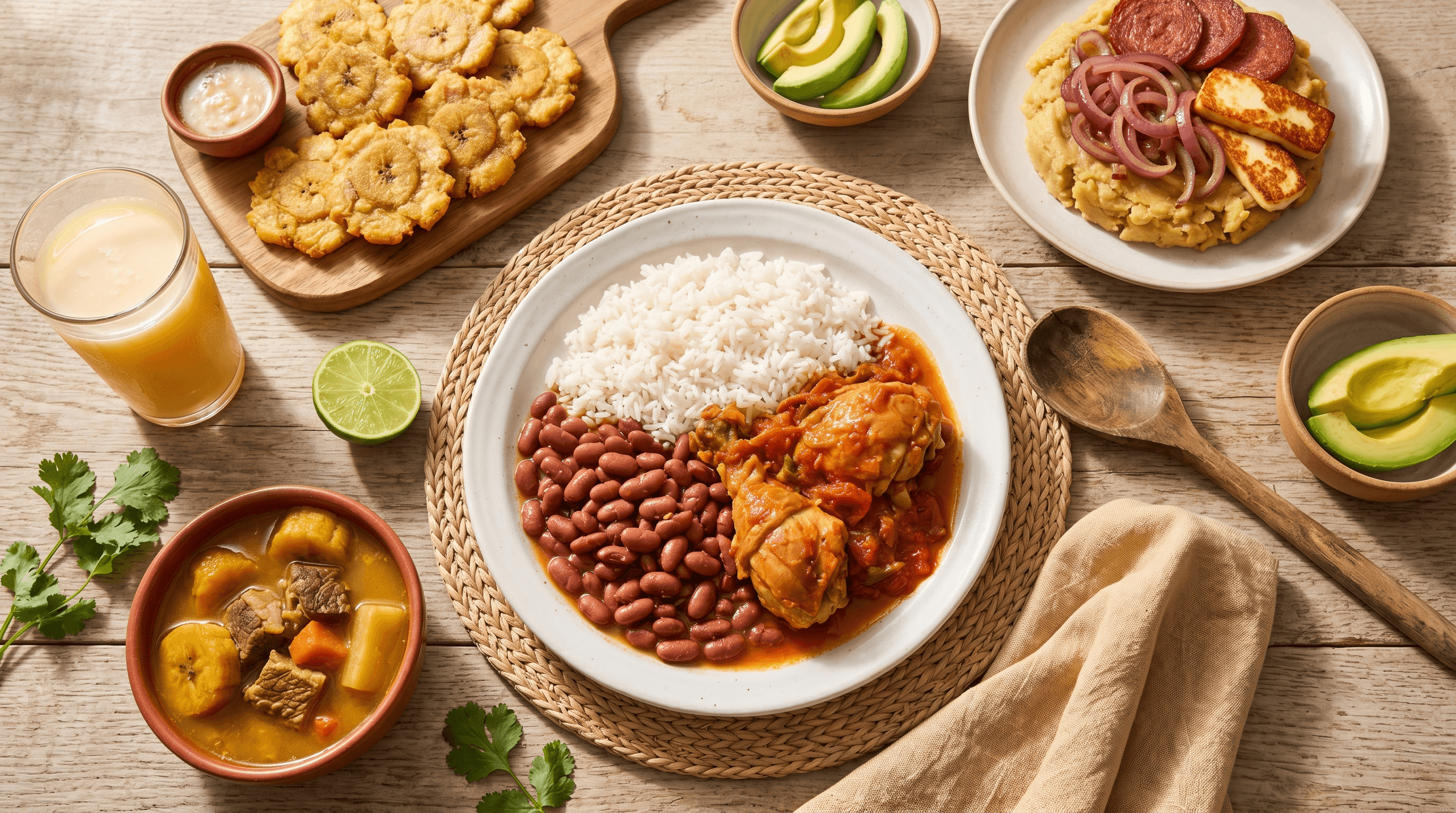
Dominican food is one of the great underappreciated cuisines of the Caribbean. It draws from Taíno, Spanish, and West African roots, layered over five centuries of trade, migration, and improvisation. The result is a kitchen built on a few staples — rice, beans, plantain, root vegetables, pork, chicken, fresh fish — combined in ways that range from the everyday to the genuinely refined. If you stay only within your resort, you'll eat well, but you'll miss most of what makes Dominican food distinctive.
This guide walks through the dishes worth trying, the meals that anchor Dominican daily life, the regional specialties, and the practical advice on where to actually find authentic versions while you're in Punta Cana. If you want to explore beyond the resort, our culture and nature excursions include several food-focused day trips.
The Foundations: Rice, Beans, and Meat
The single most important meal in Dominican daily life is called "la bandera dominicana" — the Dominican flag. It's a plate of white rice, red or black beans (habichuelas guisadas), stewed chicken or beef, and almost always a side of fried plantains or green salad. The dish gets its name from the colors that loosely echo the national flag: white rice, red beans, brown meat, green salad. Variations exist in every corner of the country, and every Dominican family makes it slightly differently.
What makes la bandera worth seeking out is the bean stew itself. Dominican habichuelas are slow-cooked with sofrito, calabaza (a sweet local squash), oregano, garlic, and bell pepper. They have body and depth that no quick canned bean dish can match. A good bandera at a comedor (small family-run restaurant) costs 200 to 350 Dominican pesos — about four to seven US dollars — and feeds you for the rest of the day.
Mangú: The Breakfast Dish That Defines a Country
If there's one Dominican dish that travelers consistently fall in love with, it's mangú. The preparation is simple: green plantains boiled until tender, then mashed with butter and a splash of the cooking water until smooth, topped with red onions sautéed in vinegar. The texture is somewhere between mashed potatoes and a thick polenta, with the unmistakable starchy sweetness of green plantain underneath. It's served at breakfast, almost always alongside three accompaniments — fried cheese, fried Dominican salami, and fried eggs. This combination has a name: "los tres golpes" (the three hits).
Mangú is the unofficial national breakfast. It's eaten on weekends, on holidays, on Sundays after Mass, and at small breakfast restaurants any day of the week. The first time you try a real mangú at a Dominican family table is the moment most visitors stop thinking about Dominican food as Caribbean buffet fare and start thinking about it as a serious cuisine in its own right. The dish has so much cultural weight that there's a popular saying — "yo soy más dominicano que el mangú" (I'm more Dominican than mangú) — used to claim deep Dominican identity.
Where to Try Mangú Near Punta Cana
Most all-inclusive resorts now serve mangú at the breakfast buffet, and the quality varies widely. The plantains are usually overcooked or under-mashed, the onions inadequately reduced. The real version is at small restaurants in towns like Veron, Friusa, and the inland neighborhoods of Bávaro. Ask any taxi driver where his mother eats breakfast, and you'll get a better answer than any review site can provide. The drive from a resort is typically 15 to 25 minutes, and breakfast for two costs under twenty dollars.
Sancocho: The Sunday Stew
Sancocho is the dish that Dominican families gather around. It's a thick, deeply layered stew of multiple meats (traditionally seven, in the most elaborate version) cooked with root vegetables — yuca, yautía, ñame, auyama (squash) — plus green plantains, corn, and a generous base of sofrito. The cooking takes most of a day. The result is something between a stew and a soup, served in a bowl with rice on the side and avocado slices. The first spoonful explains a great deal about why Dominicans treat sancocho as a celebration food.
The most legendary version is "sancocho de siete carnes" — seven-meat sancocho — which traditionally includes beef, pork, chicken, sausage, smoked pork, goat, and sometimes a seventh meat depending on the family. This version is made for weddings, baptisms, family reunions, and major holidays. Simpler everyday versions might use just chicken or just beef, but they share the same layered depth. Sancocho is the dish you make when there's something to celebrate and time to cook properly.
Where to Try Sancocho
Sancocho is rare on resort menus and rarely done well when it appears there. Most resorts serve it on Sundays in their "local cuisine" stations, but the version is usually watered down. To experience real sancocho, you need to either visit a Dominican home (which our contact team can sometimes arrange through community connections) or visit a comedor on a Sunday afternoon, when many families prepare it specifically for the after-church meal.
Mofongo: The Plantain Mountain
Mofongo is Puerto Rican in origin but has been thoroughly adopted into Dominican cuisine. It's made from fried green plantains pounded in a wooden mortar (pilón) with garlic, salt, and chicharrón (fried pork rind), then shaped into a dense, savory mound. Dominican mofongo is often served with a meat protein on the side — usually shrimp in garlic sauce, stewed chicken, or pork — and a small bowl of garlic-tomato broth poured into a well at the top.
The dish has range. A simple mofongo at a roadside stand might be ten dollars and entirely satisfying; a refined mofongo at a high-end Dominican restaurant can be twenty-five dollars and architectural. Either version is worth trying. The pounding of the plantains creates a texture you can't replicate with any other method — slightly chewy, dense, deeply garlicky. Mofongo is the dish that visitors most often try to recreate at home and immediately understand they need to come back to the Dominican Republic for the real thing.
Pollo Guisado and the Art of Stewed Meats
If you eat at a Dominican home, the chances are very high that the centerpiece protein is pollo guisado — stewed chicken. The preparation involves marinating the chicken with sofrito, oregano, lime juice, and garlic, then browning the pieces in caramelized sugar (yes, sugar — this is the Dominican color-and-depth technique) before stewing them with bell peppers, tomatoes, and a small amount of water. The chicken comes out the deep mahogany color of long cooking, with a sauce that's served liberally over rice.
The caramelized-sugar technique is what makes Dominican stewed meats distinctive. It's also used for beef (carne guisada), pork (cerdo guisado), and even fish. The technique sounds odd until you try it — the sugar doesn't make the dish sweet; it deepens the color and adds a subtle, almost smoky background note. Once you've eaten pollo guisado done properly, the boneless chicken breast at the resort buffet starts to feel like a different food entirely.
Seafood: The Coastal Specialties
Punta Cana sits on the coast, and Dominican seafood culture is genuinely good. The default preparation is grilled or fried whole fish — usually a small snapper or grouper — served with tostones (twice-fried green plantain rounds), white rice, and salad. The fish is typically caught within hours of being served at smaller beachside restaurants. The quality at the high-end seafood restaurants in Bávaro and Cap Cana is excellent and easy to find; the more interesting experience is at the small beach shacks in Bayahibe, Macao, and El Cortecito.
Pescado con Coco — Coconut Fish
On the Samaná Peninsula, several hours from Punta Cana, the local specialty is pescado con coco — whole fish stewed in fresh coconut milk with green plantain, garlic, and herbs. It's one of the most distinctive Dominican dishes and a clear example of West African culinary influence. Samaná is a day trip from Punta Cana (about three hours each way), and on the trip you can sometimes combine the dish with humpback whale watching from January through March.
Locrio — Dominican Rice Dishes
Locrio is the Dominican equivalent of paella or arroz con pollo, but with its own distinct character. Rice is cooked with sofrito, tomato paste, and a protein — usually chicken (locrio de pollo), shrimp (locrio de camarones), or sardines (locrio de arenque). The grains come out yellow-orange, lightly oily, deeply flavored. A good plate of locrio at a comedor is one of the most satisfying lunches you can have for under ten dollars.
Street Food and Snacks
Empanadas and Pastelitos
Dominican empanadas (called pastelitos in some regions) are fried turnovers filled with seasoned meat, cheese, or vegetables. They appear at breakfast, as snacks, at parties, at roadside stands. The dough is thin and slightly crisp; the filling is generous. A plate of three or four pastelitos plus a fresh fruit juice is a classic mid-morning street meal. Most resort areas have at least one bakery or panadería that makes them properly.
Chimichurri — The Dominican Burger
The name is confusing — Argentinian chimichurri is a green herb sauce. Dominican chimichurri (often spelled "chimi") is a street burger: ground meat patty, cabbage, tomato, onion, and a special pink sauce made from ketchup, mayo, and Worcestershire, served on a soft round bun. The food trucks selling chimis appear on roadsides every evening and are a beloved late-night snack across the country. They cost two to three dollars and are most authentic at night around 10:00 PM, when the local trucks are at their busiest.
Yaniqueques and Johnny Cakes
Yaniqueques are flat fried discs of dough, somewhere between a tortilla and a fried bread. They originated in the Samaná Peninsula's English-speaking African-descendant communities (the name comes from "johnny cakes"). Sold by beach vendors, they're salty, light, addictive. They pair perfectly with the cold local beer (Presidente). If a beach vendor passes by with a basket of yaniqueques, buy one — even if you're not hungry.
Sweets and Desserts
Dominican desserts lean sweet and milky. The most famous is dulce de leche cortada — a fresh-cheese-and-milk dessert that resembles a sweet ricotta with a hint of cinnamon. Dulce de coco (coconut dulce) and dulce de batata (sweet-potato dulce) are equally common. They're sold in roadside stands across the country, often in small plastic containers. At more elaborate restaurants, look for arroz con leche (rice pudding made with condensed milk and cinnamon) and majarete (a corn-based pudding).
Fresh tropical fruit is the everyday dessert. Mango, papaya, passion fruit, pineapple, soursop (guanábana), zapote, and lechosa are all in season at different points of the year and are dramatically better than the imported versions found in supermarkets in colder countries. A roadside fruit stand selling cut mango with lime juice and a pinch of salt is one of the cheap pleasures of Dominican travel.
Drinks: Rum, Coffee, and Mamajuana
Coffee
Dominican coffee is grown in the central mountains and is excellent. It tends to be dark-roasted and rich, often served as a small espresso-style cup with substantial sugar already added. "Café" at a Dominican home or comedor means this small sweet cup, not the large American filter coffee. If you want it without sugar, ask for "café sin azúcar" — but try it the local way at least once.
Rum
The Dominican Republic is one of the great rum-producing nations of the Caribbean. The three main brands are Brugal, Barceló, and Bermúdez — each with multiple expressions ranging from white rum to aged sipping rums. Brugal Añejo is the everyday workhorse; Barceló Imperial and Bermúdez Aniversario are the premium aged bottles worth a tasting flight. The rum is served straight in small glasses, often with a splash of lime, or as the base of the classic Cuba Libre (rum, Coca-Cola, lime).
Mamajuana
Mamajuana is the country's traditional herbal liqueur — a mixture of rum, red wine, honey, tree bark, and dried herbs steeped together for weeks. The result is a deep brown liquid with a complex, slightly medicinal taste that grows on you across a few sips. Dominicans have many traditional claims about its restorative properties; the modern reality is that it's a unique cultural drink worth trying once. Most bars in Punta Cana serve it, and bottles of it make excellent souvenirs to bring home.
How to Find Authentic Dominican Food Near Punta Cana
The single biggest barrier to eating authentic Dominican food in Punta Cana is that the resort experience is designed to insulate you from local life. The all-inclusive buffet does include some local dishes, but they're inevitably softened to international palates. To find the real food, you need to leave the resort. Three practical strategies:
- Take a taxi 15 to 25 minutes inland. Most resort zones have nearby towns — Veron, Friusa, Higüey, El Cortecito — where Dominicans actually live and eat. Comedores and family restaurants are abundant and inexpensive. A taxi for the round trip costs $30 to $50 USD.
- Join a food-focused excursion. Our culture-and-nature excursions include several day trips that combine cultural sites with stops at local restaurants. The advantage is that the operator handles transportation and translates for you.
- Use the resort's a la carte restaurants strategically. The "local" or "Dominican" restaurant at your resort is usually the most authentic option on-site. The cuisine is still adapted for international palates, but the dishes themselves are recognizable. Ask the staff which dishes are most traditional and order those, not the international substitutes.
A Day of Eating Like a Dominican
If you want to construct a real Dominican food day, here's how it would look. Breakfast: mangú with los tres golpes at a small breakfast restaurant in Veron, around 8:00 AM. Mid-morning: a fresh fruit juice (chinola, also called passion fruit) from a roadside stand. Lunch: la bandera at a comedor, around 1:00 PM — most Dominicans eat their main meal at midday. Mid-afternoon: a small sweet coffee. Late afternoon snack: a yaniqueque or empanada from a beach vendor. Dinner: grilled whole fish with tostones at a coastal restaurant, around 8:00 PM. Late night: a chimi from a street truck around 10:30 PM, walking back to the resort or eating at the truck itself.
Total cost for two people, including all transportation: probably forty to sixty US dollars. The experience is a different country than the resort version, and the food is dramatically better.
Final Thoughts
Dominican cuisine doesn't have the international fame of Mexican, Cuban, or Peruvian food, but it's quietly one of the strongest food cultures in the Caribbean. Every dish carries history — Taíno root vegetables, African slow-cooking, Spanish sofrito, regional Caribbean improvisation. To eat Dominican food properly is to understand the country itself in a way that no museum visit can match.
If you'd like recommendations specific to where you're staying, or want to add a food-focused excursion to your trip, contact our team with your dates and dietary preferences. We'll suggest the spots that match what you're hoping to try, and we'll be honest about which experiences are easy and which take some planning. Good Dominican food is everywhere in this country — you just have to know to step outside the resort walls to find it.