
Humpback Whale Watching in Samaná: Complete 2026 Guide
Complete guide to humpback whale watching in Samaná Bay — Jan-Mar season, day trip from Punta Cana, ethical operators, what to expect.
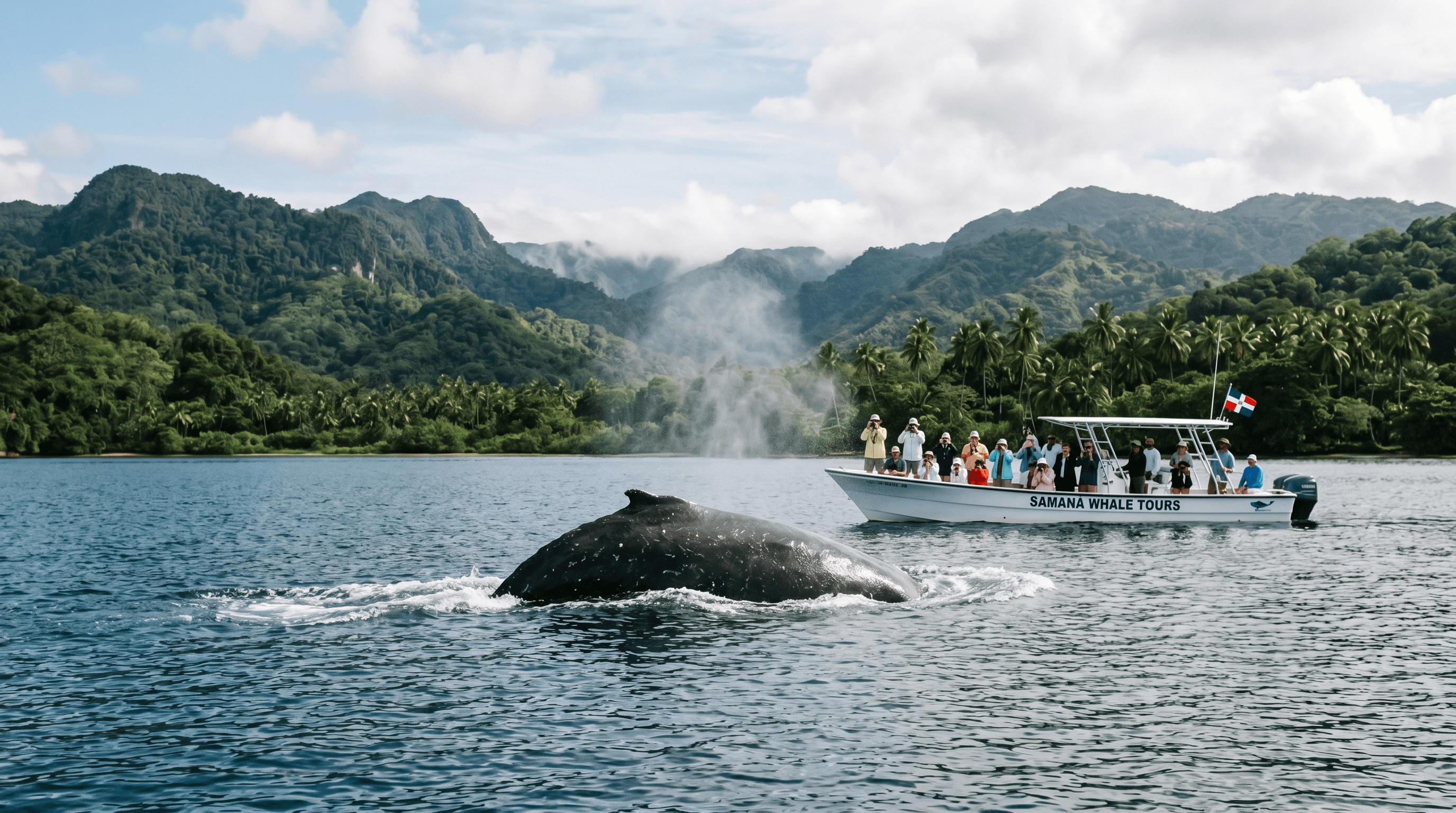
Every year between mid-January and late March, between 1,500 and 2,000 humpback whales arrive in the warm Caribbean waters off the Samaná Peninsula to mate and give birth. It's one of the most reliable concentrations of breeding humpback whales anywhere in the world — and it's accessible as a day trip from Punta Cana. If your visit overlaps with the season, a whale-watching excursion to Samaná is genuinely one of the most extraordinary wildlife experiences the Caribbean offers.
This guide explains the season, the science, the logistics of the day trip, what to expect on the water, how to spot ethical operators, and what to skip. If you'd like help arranging a Samaná whale-watching day trip from your Punta Cana resort, contact our team — we coordinate these trips throughout the season and know which operators run them properly.
Why Samaná: The Science Behind the Spectacle
Humpback whales (Megaptera novaeangliae) follow one of the longest migrations of any mammal on Earth. The North Atlantic population spends summer feeding in cold, productive waters off Iceland, Greenland, Canada, and the northeastern United States. As winter approaches, they migrate roughly 5,000 kilometers south to the warm shallow waters of the Caribbean to breed. The shallow banks north of the Dominican Republic — particularly Banco de la Plata (Silver Bank) and Banco de la Navidad — and Samaná Bay itself form their primary breeding grounds.
These waters were recognized as critically important in 1986 when the Dominican Republic established the Marine Mammals Sanctuary Bancos de La Plata and Navidad, the first sanctuary of its kind in the Atlantic Ocean and one of the first in the world dedicated to marine mammal habitat. The sanctuary covers more than 19,000 square miles and is the largest marine protected area in the Dominican Republic. The International Whaling Commission's country profile for the Dominican Republic documents the long history of research and conservation work on this population, which is now recognized as the primary breeding ground for nearly all Atlantic humpback whales.
The Season: When to Go
The whale-watching season in Samaná runs from approximately January 15 through late March, with February typically being the peak month. The first whales begin arriving in mid-to-late December and the last ones depart by mid-April, but the formal season is set to align with peak whale presence. Outside this window, whale-watching trips don't run because the whales simply aren't there.
Within the season, every day is different. Some days the bay produces close, prolonged sightings — whales breaching, tail-slapping, mother-calf pairs cruising near the surface. Other days are quieter with whales further out, breathing at the surface but not displaying as actively. Most operators give a sighting guarantee (typically a free repeat trip if no whales are seen), but in practice, sightings on any given day during peak season are near-100 percent because the bay is so densely populated with whales during these weeks.
Getting to Samaná from Punta Cana
Samaná is roughly 230 kilometers from Punta Cana, on the northeastern coast of the Dominican Republic. The drive takes about 3 to 3.5 hours via highway, depending on traffic and starting point. Most whale-watching day trips from Punta Cana include this overland transport, typically picking guests up at their resort around 5:30 to 6:30 AM and returning around 7 to 9 PM. It's a long day.
Alternative options include flying via short charter flight (significantly more expensive but reduces the travel time), or basing yourself in Samaná for one or two nights as part of a longer DR trip. For most travelers staying in Punta Cana resorts, the day trip is the practical option despite the early start. The drive passes through some beautiful Dominican countryside — sugar cane fields, mountains, small towns — so the transit time has some scenic value even before you reach the water.
What to Expect on the Boat
The Boats
Samaná whale-watching boats are typically medium-sized (30 to 100 passengers) with covered upper decks for sun shelter and open viewing areas. They're built for the bay's conditions, which can be calm in the morning and choppier in the afternoon. Some operators run smaller boats (10 to 20 passengers) for a more intimate experience — these often cost more but provide better viewing positions and more attentive guides.
The Approach
Regulations in the Dominican sanctuary require boats to maintain specific distances from whales — typically at least 80 meters for observation, with closer approaches strictly prohibited. Boats are not allowed to chase whales, encircle them, separate mother-calf pairs, or position themselves where the whale must change course to avoid the boat. Compliant operators follow these rules; non-compliant ones don't. Following the International Whaling Commission's responsible whale-watching standards is the marker of an ethical tour — guests should ask their operator about these protocols before booking.
What You'll See
Humpback whale behaviors visible from a tour boat include: breathing at the surface (a tall spray of mist from the blowhole), the fluking dive (the tail rising vertically as the whale descends), breaching (the whale launching most of its body out of the water), tail-slapping (also called lobtailing), pectoral fin slaps, and occasionally singing (which you can sometimes hear underwater near a male whale). Mother-calf pairs are common during the season — calves are typically a few weeks to a few months old and remain very close to their mothers. The competitive groups (multiple males pursuing a female) can be dramatic, with fast swimming and aggressive surface activity.
Choosing an Ethical Operator
Not all whale-watching operators in Samaná are equally responsible. The differences matter for the whales and for your experience.
Signs of a Good Operator
- Government-licensed: The Dominican Ministry of Environment requires permits for whale-watching operators. Verify this before booking. Licensed operators participate in observance of distance rules and time-on-station limits.
- Naturalist guide on board: A trained naturalist or biologist gives commentary on whale behavior, biology, and conservation throughout the trip. This is the difference between just seeing whales and understanding them.
- Reasonable group size: Boats with 60+ passengers feel crowded at the rails. Smaller boats (20 to 40) offer better viewing for everyone.
- Multilingual capability: English, Spanish, French, and German are common request languages. Operators who can accommodate your language give a richer experience.
- Stays at distance: A good captain holds the regulated distance and lets the whale's natural behavior dictate the encounter. Bad captains push closer hoping for better photos.
- Time limits at sightings: Ethical operators limit time spent in proximity to a single whale or group (typically 20 to 30 minutes) before moving on, reducing cumulative disturbance.
Red Flags
Operators that approach whales closely, chase pods, surround whales with multiple boats, or stay at one sighting indefinitely are causing real harm to the population. NOAA's marine-life viewing guidelines document the cumulative stress that aggressive whale-watching causes — interruptions to feeding, mating, and nursing all reduce reproductive success over time. Skip operators that promise "you'll see them up close" — the close approaches are the warning sign, not the selling point.
What to Bring
- Camera with a telephoto lens or zoom (200mm+ equivalent): Smartphone cameras can capture some whale activity but a real zoom lens is significantly better for the typical distance.
- Sunscreen and a hat: Even on cool days, the equatorial sun on water is intense.
- Light jacket or sweater: Morning departures and afternoon winds can be chilly on the water.
- Motion sickness preventive: The bay can be calm, but the inevitable swells over the day affect prone individuals. Take medication 1 hour before departure if needed.
- Snacks and a water bottle: Most tours include some food but the day is long; supplemental snacks help.
- Binoculars: Even an inexpensive pair (8x42 or similar) dramatically improves the experience of spotting distant whales.
- Reusable water bottle: Disposable plastic enters the marine environment far too easily; bring your own.
Combining the Trip with Other Samaná Activities
If you have flexibility, the Samaná region offers several worthwhile additions that pair well with whale watching. Cayo Levantado (Bacardi Island) is a small island in Samaná Bay with white-sand beaches — many whale tours include a stop here. El Limón Waterfall, a 40-meter cascade reached by horseback or hiking, is one of the country's most photographed natural sites and works well as an afternoon stop. Samaná town itself has a fishing-village atmosphere with restaurants serving fresh seafood. Several operators package whale watching with these additional stops as a full-day experience.
For travelers willing to commit two days, staying overnight in Samaná opens up these options without the time pressure of the day trip. The peninsula has accommodations ranging from small boutique hotels to large all-inclusive resorts.
Whale Watching with Kids and Older Travelers
Whale watching from Samaná works for most ages — there's no minimum age set by operators, though the 6 AM resort pickup and the long boat day are demanding for very young children and frail older travelers. Kids from about age 6 and up generally engage with the experience meaningfully if they're prepared with realistic expectations: there will be slow stretches between sightings, the boat may rock, and the whales appear and disappear without warning.
For grandparents and people with mobility limitations, the boat boarding and deck movement may be challenging — talk to the operator about accessibility. Some boats have stairs and narrow gangways; others are more accessible. The early start is also a real consideration: a 5:30 AM resort pickup after a 7:30 AM resort breakfast is not realistic for everyone. The Whale and Dolphin Conservation responsible-watching guide has additional family-oriented guidance on what to expect from a tour.
Understanding Humpback Whale Behavior
Humpback whales are among the most behaviorally rich of the great whales, and a quick understanding of what you're seeing makes the experience significantly more meaningful. The full repertoire of surface displays evolved partly as communication and partly, scientists believe, as part of courtship and competition.
Breaching
Breaching — the whale launching most of its body out of the water and crashing back down — is the iconic image of humpback watching. A 30-ton adult breaching is a thunderous sight from a few hundred meters away. The behavior is most common in males, often as part of competitive displays around females, but also occurs in calves and adults of both sexes. Theories about the function include parasite removal, communication, play, and competitive signaling. The Samaná breeding season produces some of the highest breaching frequencies anywhere in the world.
Singing
Male humpbacks produce long, complex songs during the breeding season. A typical song lasts 10 to 20 minutes and the whale repeats it for hours, sometimes days. All males in a population sing the same song in any given year, but the song changes gradually over time and propagates between populations. The function is debated — courtship display, competitive signaling, or both. From a Samaná tour boat, you sometimes hear the song through the hull if a singing male is nearby; smaller operators occasionally drop a hydrophone to share the audio with guests.
Mother-Calf Pairs
Calves are born in these warm waters between January and April. A newborn humpback weighs about a ton and nurses for nearly a year, drinking 200 to 600 liters of milk per day. Mother and calf pairs are often visible from boats — the calf surfacing close to the mother, sometimes resting on her back, occasionally play-breaching. Calves develop the skills they need for the long northward migration during these weeks before departure. The Samaná sanctuary protections exist specifically to give these vulnerable pairs the calm they need.
Competition Groups
Multiple adult males will pursue a single receptive female, forming what biologists call a competitive group. The behavior is energetic and visually striking — fast swimming, surface displays, occasional aggressive contact between competing males. These groups can include 4 to 20 whales and last hours. Spotting one is a highlight of any whale-watching season; the activity is so visible from distance that even passengers on the deck can follow what's happening.
Photography Tips
Good whale photography is harder than most people expect. The whales surface unpredictably, the boat is moving, the light changes constantly, and the action lasts only seconds. A few practical tips: pre-focus on the water surface at the typical sighting distance; use a fast shutter speed (1/1000 or faster); shoot in burst mode when whales surface; and aim slightly ahead of where the whale just was, because the next surfacing is usually slightly forward. Don't waste the experience trying to get the perfect shot — most of the best whale moments happen when people are watching with their eyes, not staring at a screen.
Costs and Booking
Day trips from Punta Cana to Samaná for whale watching typically cost between 130 and 200 USD per adult, including transport, lunch, and the boat trip. Children pricing varies but typically runs 70 to 100 USD. Private or smaller-boat options cost more. The trip from Samaná itself (if you're already there) runs about 60 to 80 USD for the boat trip alone, plus separate costs for additional stops like Cayo Levantado or El Limón.
Book in advance during high season (mid-February through early March) — the better operators sell out 1 to 2 weeks ahead, and the deep-discount last-minute options are usually the lower-quality boats that you should avoid. Booking through your hotel concierge or an established operator's website is safer than the beach hawkers, who sometimes mark up the worst-quality boats as last-minute deals.
Conservation Status: A Recovery Story Worth Witnessing
North Atlantic humpback whales were nearly extinguished by industrial whaling in the 19th and early 20th centuries. International protection in 1955 and the global commercial whaling moratorium of 1986 began the slow recovery. The current North Atlantic population is estimated at around 12,000 to 15,000 individuals — still well below pre-whaling numbers, but the species has been removed from the most-endangered IUCN category and now sits on the recovery side of the long arc.
Visiting the Samaná breeding grounds today means seeing a population in active rebound — a rare conservation success story. The whales you watch are descendants of the survivors of a near-extermination event, and the Dominican sanctuary established in 1986 was created specifically to give this recovery the protected habitat it needed. Responsible whale watching contributes to the economic justification for continued protection; irresponsible whale watching erodes it. The choice of operator matters not just for your day but for the broader ecosystem.
Final Thoughts
Samaná whale watching is one of those rare wildlife encounters that genuinely lives up to the marketing. The whales are massive, abundant, and engaged in social behaviors that are remarkable to witness — courtship, mother-calf interactions, the occasional spectacular breach. The day trip from Punta Cana is long but feasible, and if your visit falls between mid-January and late March, it's one of the most distinctive things you can do in the Dominican Republic.
If you'd like help arranging a Samaná whale-watching day from your Punta Cana resort, contact us with your dates. We'll pair you with operators we trust, handle the early-morning logistics, and make sure the trip you book is the one that actually delivers what the brochure promises.