
Merengue, Bachata & Dominican Music: A Visitor's Guide to the Sound of the Country
Origins, key artists, where to hear live music, and how to actually dance — a complete introduction to merengue, bachata, dembow, and Dominican musical culture.
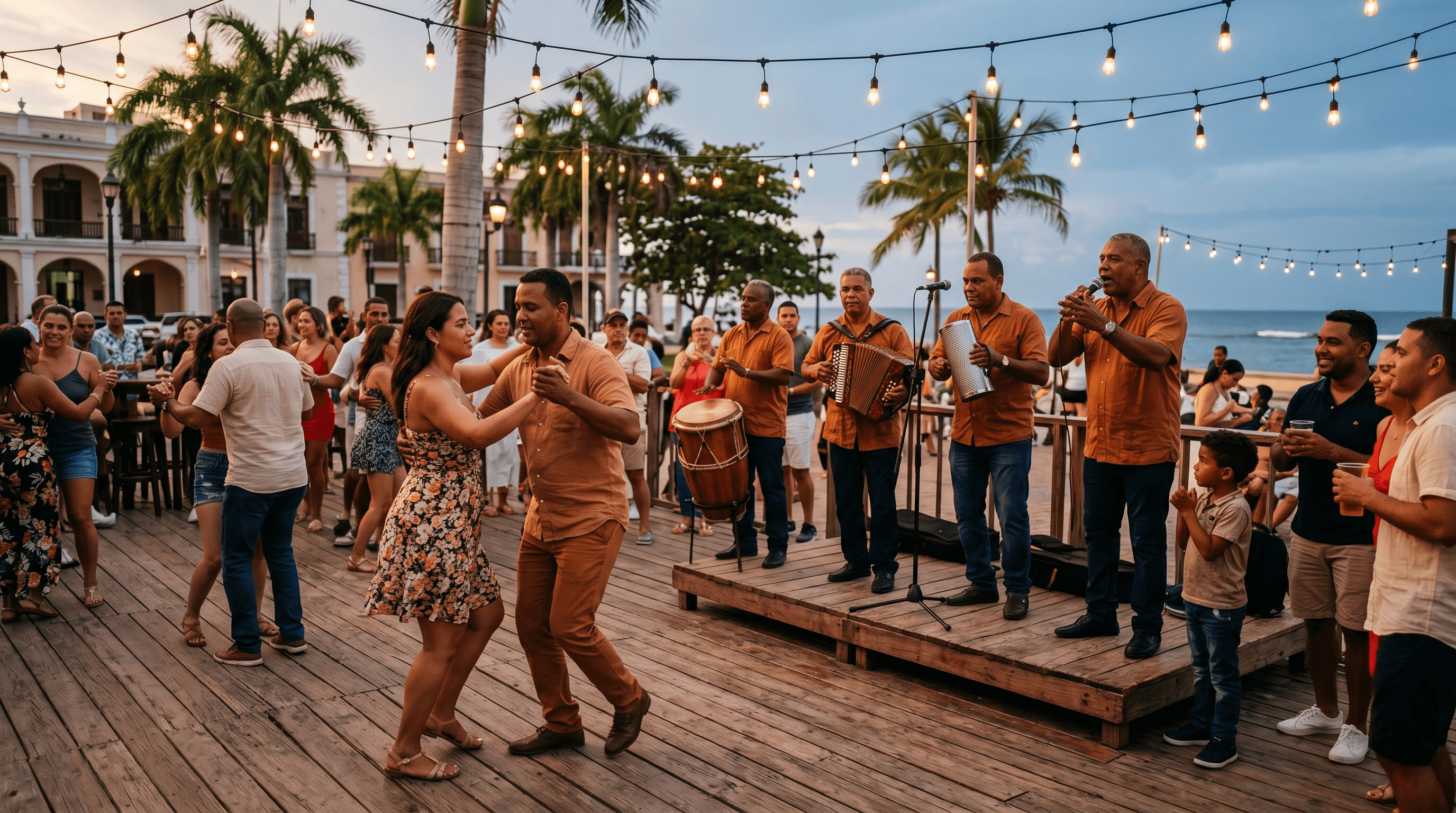
Music in the Dominican Republic is not an entertainment category — it's the country's pulse. You hear it from the moment you step off the plane: in the airport corridors, in the taxis, from rolling speakers on motorbikes, in cafés, in barber shops, on the beach, in the resort restaurants. The two genres that define Dominican identity are merengue and bachata, and both were invented here. Understanding even a little about them changes how you experience the country.
This guide walks through what each genre is, where they came from, who the major artists are, and where you can actually experience live Dominican music while you're in Punta Cana. If you want a structured introduction, several of our culture and nature excursions include musical performances or visits to venues where live music is part of the experience.
Merengue: The National Genre
Merengue is the official national music of the Dominican Republic, designated as such by presidential decree in 2005 and listed as Intangible Cultural Heritage by UNESCO in 2016. It's a fast-tempo dance music in 2/4 time, traditionally driven by three instruments: the tambora (a two-headed drum played with one stick and one hand), the güira (a metal scraper played with a stiff brush), and an accordion. Modern merengue ensembles add saxophones, piano, bass, and sometimes brass sections, but the foundational rhythm stays the same.
The origins are contested but the genre clearly emerged in the rural Cibao region of the northern Dominican Republic during the mid-19th century. It blended African rhythmic elements (the tambora, the syncopation), European harmonic structure (the accordion, brought by traders), and indigenous Taíno influence (the güira evolved from a Taíno percussion instrument). For decades it was considered low-class music — too rural, too African, too associated with the working poor. Wealthy Dominicans preferred imported European music. That changed under the dictator Rafael Trujillo, who in the 1930s deliberately elevated merengue as a symbol of Dominican nationalism. The political use of the music was cynical, but the cultural effect was lasting: by the 1960s merengue was the unambiguous national music.
How to Recognize Merengue
If you hear fast tempo, an accordion or saxophone playing a quick melodic line, a tambora producing a continuous bouncing rhythm, and a steel-scraper sound running underneath everything — that's merengue. The dance is straightforward: a quick two-step, hip movement on the second beat, partners moving close but not as tightly held as in salsa. Most Dominicans learn the basic step before they learn to read. Even casual dance floors at resorts feature it.
Key Merengue Artists to Know
Juan Luis Guerra is the most internationally famous Dominican musician of any genre. His group 4.40 modernized merengue and bachata in the 1980s and 1990s, bringing them to global audiences without losing their roots. Songs like "Ojalá Que Llueva Café" and "Bachata Rosa" are part of the cultural canon. Guerra is from Santo Domingo and still records actively.
Wilfrido Vargas is the godfather of modern commercial merengue. His big-band arrangements in the 1970s and 1980s defined the sound that conquered Latin America. Johnny Ventura was the most beloved merengue showman of the second half of the 20th century, with a career spanning decades. Fernando Villalona is the most popular merengue singer of the current generation — his songs are everywhere on Dominican radio. Sergio Vargas, Eddy Herrera, and Toño Rosario complete the contemporary canon.
Bachata: The Music of Heartbreak
Bachata is the second great Dominican genre and the one that has exploded in international popularity over the past twenty years. It's slower than merengue, in 4/4 time, with a distinctive guitar-driven sound. The traditional bachata ensemble has lead guitar (requinto), rhythm guitar (segunda), electric bass, bongos, and güira. The vocals are emotional, usually about romantic loss, unfaithfulness, longing, or the bitterness of failed love. The genre's nickname in its early years was "música de amargue" — music of bitterness.
Bachata emerged in the 1960s in the rural and working-class neighborhoods of Santo Domingo, particularly among migrants from the countryside who brought guitar-based serenade traditions with them. For its first thirty years, bachata was considered the music of poverty and prostitution. It was banned from radio stations, dismissed by music critics, and looked down upon by middle-class Dominicans. The music thrived anyway, in cantinas, brothels, and the homes of the people who actually loved it. The breakthrough came in 1991, when Juan Luis Guerra released the album "Bachata Rosa," which gave the genre a polished, romantic presentation that finally won middle-class acceptance.
From that point bachata exploded. The Bronx-based group Aventura, fronted by Romeo Santos, took the genre global in the 2000s with songs that combined traditional bachata structure with hip-hop sensibilities and bilingual lyrics. Romeo Santos went on to a solo career that has made him one of the biggest Latin music stars in the world. Prince Royce, Anthony Santos, Luis Vargas, Frank Reyes, and Joe Veras all contributed major songs to the canon.
How to Recognize Bachata
Listen for the requinto guitar — a high, ringing, picked melodic line that's the genre's signature sound. Underneath you'll hear a slower 4/4 rhythm with bongo accents and the unmistakable güira scraping. The vocals are emotional and usually slow. The dance is romantic, partners close together, four-step pattern with a hip movement on the fourth beat. Bachata is far easier for tourists to dance than merengue — most resort instructors teach it during evening dance classes.
Other Dominican Genres Worth Knowing
Dembow
Dembow is the contemporary urban genre of Dominican youth — a fusion of reggaeton, hip-hop, and Caribbean rhythms with an aggressive, repetitive beat. It emerged in the early 2000s and has dominated Dominican popular music for the past decade. The biggest current dembow artists are El Alfa, Tokischa, Rochy RD, and Bulin 47. The lyrics are often controversial — explicit, slangy, sometimes violent — and the genre is divisive even within the Dominican Republic. But it's what young Dominicans listen to, and dembow songs dominate the charts and the streets.
Salsa, Cumbia, and Other Latin Imports
While merengue and bachata are home-grown, Dominicans also dance and listen to imported Latin genres. Salsa is widely played but considered foreign. Cumbia (from Colombia) is popular. Reggaeton (originally Panamanian and Puerto Rican) has been fused with local sensibilities and competes with dembow for youth attention. The result is that Dominican dance floors play a mix of all these genres, often switching every few songs.
Palo and Gagá: The Older Traditions
Older than merengue or bachata are the African-diasporic religious music traditions known as palo and gagá. These are drum-based ceremonial musics with deep roots in the country's African heritage. They are not commonly heard in resort settings, but they remain alive in rural communities, especially in the Haitian-Dominican border regions and in some Afro-Dominican communities. If you're interested in deeper cultural exploration, asking a culture-focused excursion guide about these traditions can lead to unexpected and meaningful experiences.
Where to Experience Live Dominican Music
Inside the Resort
Almost every all-inclusive resort has a nightly entertainment schedule that includes some combination of merengue, bachata, and salsa. The quality varies enormously. The best resort shows feature genuine Dominican performers and good live bands; the worst are recorded music with dance instructors. The animators (entertainment staff) at most resorts also teach evening dance classes, usually free, that are a great low-pressure introduction. Even if you don't think you'll dance, sign up for one class — most travelers tell us afterward that it was a highlight.
Bávaro and Cap Cana Nightlife
Outside the resorts, the main nightlife corridors in Bávaro and El Cortecito have several venues that feature live Dominican music. Some are tourist-aware and lean toward the polished commercial sound; others are more local in character. Hard Rock Café in Cap Cana hosts decent live shows. Coco Bongo (originally from Cancún but with a Punta Cana location) features high-production cabaret-style performances that include Dominican music. For a more local feeling, ask your concierge or driver about smaller venues in Friusa or El Cortecito — the bars where the resort workers go after their shifts.
Santo Domingo's Live Music Scene
If you make the day trip to Santo Domingo (or better, an overnight), the music scene there is far deeper than anything in the resort areas. The Colonial Zone has dozens of bars and small venues featuring live performances. Mama Rumba is a long-running salsa and merengue venue in the Gazcue neighborhood. Jet Set in the Naco district has hosted major bachata and merengue stars for decades. The Malecón seafront has open-air venues. Live music in Santo Domingo on a weekend night is one of the best ways to experience the actual capital city beyond the colonial postcard version.
Festivals and Big Events
The Festival de Merengue in Santo Domingo takes place in late July or early August each year, with multiple days of free outdoor concerts on the Malecón. The Bachata Festival is held in October. Carnival season in February features parades and street music across the country. Major Dominican artists frequently perform at the Hard Rock Hotel amphitheater and the Altos de Chavón amphitheater near La Romana, so checking the schedules at both venues for your travel dates is worthwhile.
Learning to Dance: Realistic Expectations
Most travelers want to leave the Dominican Republic with at least a basic ability to dance merengue and bachata. The good news: both are accessible. Bachata is simpler than merengue for a first-time dancer because its slower tempo gives you time to think. Merengue requires more rhythm but the basic step is genuinely just walking in place. The bad news: looking confident takes practice, and a few resort classes won't make you a Dominican-level dancer.
What works for most travelers: take at least two resort dance classes (typically free, scheduled in the late afternoon), then dance with locals at the evening shows. Dominicans are extremely patient with beginning dancers and will gently guide you. The cultural rule is that asking to dance is a compliment, not an imposition — saying yes is the norm. Don't try to learn complicated turns or styling on your first attempt. Stick to the basic step, let your partner lead, and trust the music. The confidence comes from doing it, not from watching tutorials.
Private Lessons
If you want a real foundation, hire a private instructor for an hour or two. Most resorts can arrange this; alternatively, private studios in Bávaro and Punta Cana offer beginner sessions starting around 30 USD per hour. A single thirty-minute session focused on the merengue basic step and a single thirty-minute session focused on the bachata basic step is enough to dance with confidence in social situations. The investment pays off the rest of the trip.
The Music in Daily Life
More than the formal venues, Dominican music is woven into the texture of everyday life. The motorbike with the speaker strapped to it riding by playing dembow at dawn. The barber shop with merengue on the radio while the men get their morning shaves. The colmado (small corner store) with bachata playing as the older customers chat about politics. The wedding next door where the band plays until 4:00 AM. The taxi driver singing along to Romeo Santos. The kids on the beach with portable speakers playing the latest dembow track at top volume.
If you really want to understand Dominican music, you don't need to seek it out — you need to stop wearing headphones. Walk through any town or neighborhood, sit at any outdoor bar, take any local bus, and the soundtrack will find you. The music is the country's emotional vocabulary. Joy, heartbreak, frustration, longing, political anger, sexual desire — all of it gets expressed through these genres, and listening to a few songs with the lyrics translated will teach you more about how Dominicans actually feel about their lives than any guidebook.
Dominican Music and the Diaspora
One of the most important things to understand about contemporary Dominican music is that it doesn't all come from the Dominican Republic. The Dominican diaspora — particularly the large community in New York City — has been a creative engine for the genre for over forty years. Washington Heights in upper Manhattan has been called the bachata capital of the world, despite being three thousand kilometers from the country itself. Romeo Santos and his bandmates in Aventura were born and raised in the Bronx. Many of the artists you hear in Dominican taxis grew up moving between Santo Domingo and New York, between Spanish-only neighborhoods in the DR and bilingual ones in the United States, and the music reflects that border-crossing experience.
This is why so much modern bachata and dembow has English phrases mixed into the Spanish lyrics, why production styles borrow from American hip-hop, why themes increasingly include American urban experiences alongside traditional Dominican rural ones. Some traditionalists complain that the music has become less authentic, but the reality is the opposite — the diaspora is part of the Dominican experience now, and the music has simply expanded to include it. Listening to a Romeo Santos song is listening to a Dominican-American story as much as a Dominican one.
The same is true for Spanish-speaking communities in Madrid, Boston, Miami, and Puerto Rico, where Dominican music finds large audiences and influences other Latin genres in turn. The result is that the music you hear in Punta Cana is not isolated — it's part of a transnational conversation that includes millions of Spanish-speaking listeners across the Western hemisphere. Understanding this context makes the songs more interesting, because you start to hear the multiple places they come from.
A Starter Playlist
If you want to arrive in the country already familiar with the sound, here's a list of songs that will give you a working introduction across the major Dominican genres. Listen to them in the order below for a sense of how the music evolved.
- "Ojalá Que Llueva Café" — Juan Luis Guerra y 4.40 (classic merengue with deep cultural meaning, 1989)
- "La Bilirrubina" — Juan Luis Guerra y 4.40 (joyful merengue, easy to dance to, 1990)
- "Bachata Rosa" — Juan Luis Guerra y 4.40 (the song that made bachata middle-class, 1991)
- "Como El Primer Día" — Frank Reyes (classic traditional bachata, the heart of the genre)
- "Obsesión" — Aventura (the song that made bachata global, 2002)
- "Propuesta Indecente" — Romeo Santos (modern bachata at its most popular, 2013)
- "El Africano" — Wilfrido Vargas (definitive 1980s big-band merengue)
- "Tarzan" — Fernando Villalona (contemporary merengue at its most danceable)
- "Coronao Now" — El Alfa (urban dembow, the youth sound)
- "Singapur" — Tokischa & Tivi Gunz (current dembow, often divisive but everywhere)
Searching any of these on Spotify or YouTube will give you the sound of the country well before you arrive.
Final Thoughts
Music in the Dominican Republic is not background; it's foreground. The country talks to itself through merengue and bachata the way other countries talk through literature or film. You can have a perfectly pleasant trip without engaging with it, but you will have a deeper one if you do. Take one dance lesson. Listen to two or three Juan Luis Guerra songs before you arrive. Ask a taxi driver what he's playing. Stay out at one venue past midnight to see what the locals are dancing to. These are small choices that make the country come alive in ways the resort buffet cannot.
If you'd like recommendations for live music venues, dance classes, or cultural excursions during your stay, contact our team with your dates and interests. We can match you with the experiences that fit your schedule and your comfort level with going outside the resort. The music is one of the great gifts of this country, and it's available to anyone willing to listen.