
The Ultimate Guide to Saona Island: Everything You Need to Know
An honest, locally-written guide to Saona Island — what to expect, when to go, how the tours actually work, and how to make the most of the day. Written by people who run these trips every week.
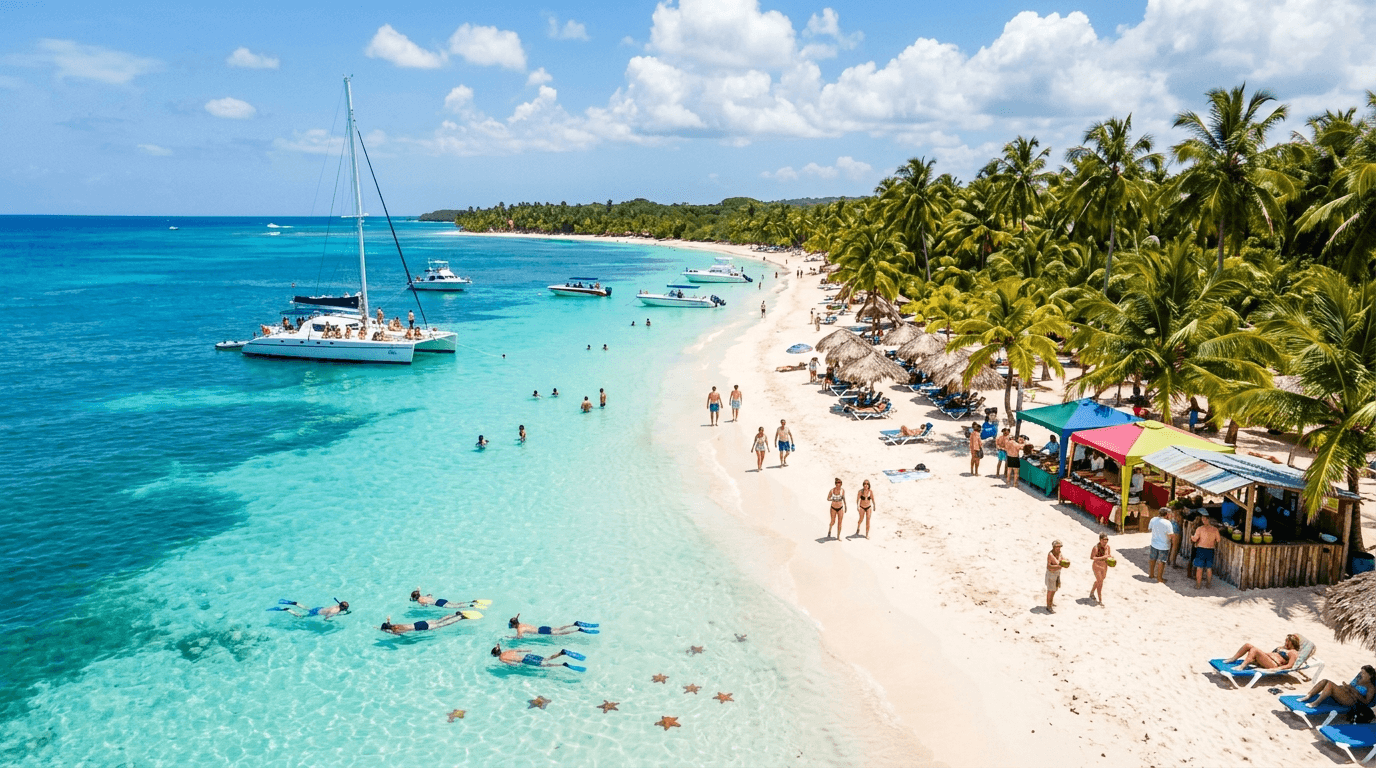
If you only do one excursion during your trip to the Dominican Republic, make it Saona Island. Tucked inside the protected waters of Cotubanamá National Park, Saona is the postcard image most travelers picture when they think of the Caribbean: ribbon-thin white sand, water so clear you can see your feet in chest-deep shallows, and coconut palms leaning over the beach exactly where you'd expect them to be. The trip there is its own adventure — a speedboat run across the Caribbean and a slow catamaran sail back, with a stop at the famous Natural Pool in between.
This guide covers everything you need to know before booking: what to expect on the day, which tour version to choose, what to pack, the best time of year to go, and the small details that separate a great Saona day from a frustrating one. We run Saona Island tours year-round, and the team behind this guide has done the route hundreds of times — these are the same recommendations we give friends.
Where Is Saona Island, Exactly?
Saona Island sits off the southeastern tip of the Dominican Republic, separated from the mainland by a narrow channel called the Canal de Catuano. The island is part of Cotubanamá National Park (formerly known as Parque Nacional del Este), a 310-square-kilometer protected reserve that includes mangrove forests, sea caves, and some of the most pristine coral reefs in the country.
From most Punta Cana and Bávaro resorts, you'll travel by air-conditioned bus to the small fishing village of Bayahibe — roughly a 90-minute drive south through sugar cane country. Bayahibe is the launching point for every Saona tour, and from the marina there it's about 45 minutes by speedboat to the island, or just over two hours by catamaran. Most tours do speedboat one way and catamaran the other to give you both experiences.
What a Typical Saona Day Looks Like
A standard Saona Island tour runs about 11 to 12 hours door-to-door, which sounds long until you realize you'll only be on transport for around three of those hours. Here's the realistic breakdown for a full-day excursion booked through us:
Hotel Pickup (around 7:00 AM)
The bus collects you from your hotel lobby. Pickup times vary depending on where you're staying — guests in Cap Cana and Uvero Alto get picked up first because they're furthest from Bayahibe. Coffee, water, and a small breakfast snack are usually included on the bus.
Arrival in Bayahibe (around 9:00 AM)
You'll arrive at the Bayahibe marina, get fitted for a life jacket, and board your speedboat. Boats hold 12 to 20 people depending on the operator, and our preferred boats have shaded canopies — important because the sun on the way out is intense.
The Natural Pool (around 10:30 AM)
Before reaching the island itself, your boat will anchor at the Piscina Natural — a sandbar in the middle of the Caribbean where the water is only about waist-deep for hundreds of meters in every direction. It's one of the strangest, most beautiful spots in the country. You'll see live starfish on the sandy bottom (please don't lift them out of the water — they suffocate quickly in air), and depending on the day, the captain may bring out fresh fruit and rum punches while you swim.
Lunch and Beach Time on Saona (around 12:00 PM)
From the Natural Pool it's a short hop to Saona's main beach at Mano Juan or Palmilla, depending on the route. A typical buffet lunch is served beachside — usually grilled chicken or fish, rice, beans, fresh salad, and seasonal fruit. After lunch you have around two hours to swim, walk the beach, sunbathe, or explore the small village of Mano Juan, a working fishing community of brightly painted wooden houses that has been on the island for over a century.
Catamaran Return (around 3:00 PM)
The return trip is the slow, sociable part of the day. You'll board a catamaran with music, an open bar (rum, beer, soft drinks), and plenty of deck space to lounge. The sail back takes around two hours, with most tours arriving in Bayahibe by 5:00 PM. The bus then drops you back at your hotel by 6:30 or 7:00 PM.
Which Saona Tour Should You Book?
There are three main versions of the Saona tour, and the right one depends on your group and what you want from the day.
Classic Saona (Speedboat + Catamaran)
This is the most popular version and the one we recommend for first-timers. You get the thrill of the speedboat ride out, the Natural Pool stop, beach time, and the relaxed catamaran sail back. It's the best mix of adventure and relaxation, and the price (typically $89 to $109 USD per person depending on the season) is the same as the catamaran-only version. Check current pricing on our excursions page.
Catamaran-Only Saona
If you have small children, anyone prone to seasickness, or you simply prefer a slower pace, the catamaran-only version is gentler. You'll spend more time on the water and less on the island, but the journey itself becomes the experience. Good for couples and families with kids under five.
Private Saona Tour
For groups of six or more, a private speedboat or catamaran can actually work out cheaper per person than separate tickets, and you control the itinerary — extra time at the Natural Pool, a quieter beach landing, or a sunset return. Send us a message through the contact form with your group size and dates for a custom quote.
Best Time of Year to Visit Saona Island
Saona is open and operating year-round, but the experience changes noticeably by season.
December to April — Peak Season
These are the busiest months, with the calmest seas, lowest humidity, and most reliable sunshine. You'll have near-perfect weather but you'll also share the beach with more tourists. Book at least a week in advance during this window, and longer over Christmas, New Year, and Easter.
May to July — Shoulder Season
Our favorite time. The crowds thin out, the weather is still excellent, and water temperatures climb into the high 20s°C. Afternoon showers are possible but rarely last long, and the island feels significantly more relaxed.
August to November — Low Season and Hurricane Watch
August and early September are hot and humid, and from mid-August through early November the Atlantic hurricane season is active. That said, the Dominican Republic is rarely a direct hit target, and most days remain sunny. Prices are at their lowest, and if you book through us, your deposit is refundable if a named storm forces a cancellation.
What to Pack for Saona Island
Pack light but pack smart — there's nowhere to buy forgotten essentials once you're on the boat. Here's the list we give every guest:
- Reef-safe sunscreen (regular sunscreen damages coral and is increasingly restricted in protected areas)
- A hat and polarized sunglasses — the glare on the water is real
- Swimwear worn under your clothes (changing facilities are limited)
- A second dry shirt or coverup for the catamaran return
- Water shoes if you have them — the Natural Pool sandbar is soft, but the beach edge can have small shells
- A waterproof phone pouch (you'll want one in the Natural Pool)
- Cash in small US dollar bills for tips and souvenirs in Mano Juan
- A reusable water bottle — most operators have refill stations on the boats
What you can leave behind: large beach towels (provided by most operators), heavy bags, and anything you'd be sad to lose to salt water.
A Brief History of Saona Island
Christopher Columbus is credited with the first European sighting of Saona in 1494 during his second voyage. He named it Adamanay after the indigenous Taíno word for the island, before his companion Michele da Cuneo claimed naming rights and renamed it after his hometown of Savona in Italy — over the centuries the spelling drifted to Saona. Long before that, the island had been inhabited by the Taíno people, and rock art and ceremonial cave systems from that era still survive in the protected interior, though they're not part of standard tour routes.
Today, Saona is uninhabited except for the small fishing village of Mano Juan and a handful of park ranger stations. Mano Juan itself is worth a walk during your beach time. Around 500 people live there full-time, supported by fishing and tourism. The brightly painted wooden houses on stilts, the open-air seafood shacks, and the small turtle conservation center near the southern edge of the village are all photogenic and give you a glimpse of Dominican coastal life that is increasingly rare on the more developed mainland coast.
Conservation and Responsible Travel
Saona's beauty is fragile, and the rules in place around the island exist for good reason. The Natural Pool is famous for its starfish, but recent biologist studies have shown that lifting a starfish out of the water — even for a few seconds for a photo — can suffocate it. Starfish breathe through their skin using oxygen dissolved in seawater; air exposure rapidly damages their respiratory system. The animals you see on the sandbar today are direct descendants of ones that have lived there for decades, and the population has declined in recent years. Take photos by leaning over the water with the starfish below, not by holding them in the air.
The reefs you'll snorkel above are similarly sensitive. Standing on coral, even accidentally, can kill polyps that took decades to grow. Reef-safe sunscreen (without oxybenzone or octinoxate) is now legally required in some Caribbean parks and strongly encouraged in Cotubanamá. We carry spare bottles on our boats for guests who forget — just ask your guide.
Finally, please carry out everything you carry in. The park's rangers do an extraordinary job keeping the beaches clean, but the sheer volume of daily visitors means stray bottle caps, sunscreen tubes, and plastic wrappers occasionally slip through. Setting a quiet example matters more than you'd think.
Photography Tips for the Best Saona Photos
Saona produces some of the most-shared travel photos in the Caribbean, but the conditions are tricky. The water is so reflective that camera meters often underexpose your subject and blow out the sky. A few practical tips from photographers we've worked with:
- Shoot during the catamaran ride back, around 3:30 to 4:30 PM — the light is softer and the colors more saturated than at midday.
- For Natural Pool photos, get the camera low to the water surface. A waterproof phone case held just above the waves produces dramatic, half-submerged shots.
- Polarized sunglasses double as a polarizing filter if held in front of a phone camera — they cut glare and deepen the blue.
- The white sand at Mano Juan is reflective. Tap the screen to meter for your subject's face, not the background, or everyone in your photos will look like a shadow.
- Wide shots of the boats anchored at the Natural Pool work best from waist-deep water with the horizon roughly a third up the frame.
If you want professional photos, some catamaran operators offer onboard photographers for an extra $30 to $50. Worth it if you're celebrating an anniversary or honeymoon — these are the trip photos you'll print and frame.
Is Saona Good for Families with Kids?
Yes, with a few caveats. Children of all ages can do the tour, but the day is long and there's a lot of sun exposure. The Natural Pool is one of the safest swimming spots in the Caribbean for kids — water rarely goes above an adult's waist for hundreds of meters around the anchored boats — and the beach at Mano Juan has very gentle surf.
For families with kids under five, we strongly recommend the catamaran-only version. The speedboat ride out can be bumpy in afternoon chop, and small kids tire of it quickly. You can read more about other family-friendly options in our guide to family excursions in Punta Cana.
What About Combining Saona with Other Excursions?
Saona pairs well with shorter half-day activities on the days before and after, but we don't recommend stacking it back-to-back with another full-day tour. You'll be tired. A good rhythm for a one-week trip:
- Day 1 — Arrival and resort time
- Day 2 — Half-day catamaran or reef snorkeling tour
- Day 3 — Beach day
- Day 4 — Saona Island (the highlight)
- Day 5 — Beach day to recover
- Day 6 — Buggy or zip-line adventure
- Day 7 — Departure
If you're a certified diver or want to learn, our parent company Grand Bay of the Sea runs PADI diving programs out of Cabeza de Toro that pair beautifully with a Saona trip on a different day.
Honest Answers to the Things Travelers Worry About
Will I get seasick?
Most people don't, but if you're prone to motion sickness take a tablet 30 minutes before pickup. The speedboat ride is the bumpiest part — once you're on the catamaran return, the boat is so wide and stable that even sensitive passengers are usually fine.
Is the open bar really open?
On reputable tours, yes. Local rum, beer, soft drinks, and water flow freely on the catamaran. Premium spirits and cocktails sometimes cost extra — your guide will tell you upfront which drinks are included.
Will Saona be crowded?
It can be, especially at peak times around lunch. The trick is the tour route — some operators land at the busier Palmilla beach, others at quieter Mano Juan. We deliberately choose routes that avoid the worst of the crowds. If a quiet beach matters to you, mention it when you book through us.
Is it worth the money?
Honestly, yes — Saona is one of those rare excursions that lives up to the marketing. The combination of the Natural Pool, the catamaran sail, and the island itself is genuinely unique. If you only have budget for one excursion during your trip, this is the one.
Common Booking Mistakes (and How to Avoid Them)
We've watched travelers make the same handful of mistakes year after year. None are dealbreakers, but each one chips away at what could have been a flawless day.
Booking on the Day You Arrive or Depart
Saona is a long day. If your flight lands at 2:00 PM, do not book Saona for the next morning — you'll be too jet-lagged to enjoy it. Likewise, never schedule it for your departure day; flight delays in the morning can cascade and the bus won't wait. Build in a recovery day on either end.
Buying at the Resort Lobby Desk
Most resorts have a third-party tour desk in the lobby that sells Saona trips at significantly inflated prices — sometimes double what you'd pay booking directly. They're also locked into specific operators that may not match your group's needs. Booking through us, you skip the resort markup and we can recommend the specific operator that fits your situation (catamaran-only, smaller boat, quieter beach landing, etc.).
Skipping the Deposit and Showing Up to Pay Cash
On peak-season days, Saona tours sell out 3 to 5 days in advance. Walk-up bookings are sometimes possible during shoulder season but rarely during December through April. The deposit reserves your spot and is refundable up to 48 hours before — there's no downside to securing it in advance.
Underestimating the Sun
The Caribbean sun at 11 degrees north of the equator is more intense than what most North American and European travelers are used to. Even with sunscreen, fair-skinned visitors can burn through a single Saona day. Reapply every two hours, wear a rashguard for the snorkeling portion, and seek shade during the lunch break.
Ready to Book?
Saona Island is the single most popular excursion in the Dominican Republic for a reason. If you'd like to lock in a date, head to our excursions page to see current availability and pricing, or send us a message with your dates and group size. We typically reply within a few hours, and our team is bilingual in English and Spanish. See you on the boat.